 Add to Chrome
 Add to Firefox
 Add to Edge
CellNet -- Localizing Cells using Sparse and Noisy Point Annotations
Jun 10, 2026
Counting living cells is an important step in many biological research workflows. Our collaborators at the Wellcome Sanger Institute study vital genes in humans via large scale saturation genome editing screening, which requires repeatedly counting cells a great number of times. Computer Vision based automation is crucial for high throughput and resource efficiency. In this work, we develop a regression-based deep learning computer vision algorithm to detect and count cells in phase-contrast microscopy images. To reduce annotation effort, which in practice often becomes a bottleneck, we focus on counting cells only using sparse point annotations, which are fast and easy to acquire. By comparison to state-of-the-art 0-shot methods, we show that regression-based counting is a promising alternative in low data regimes. Through developing methods to automatically count living cells in microscopy images, we contribute to valuable research on the human genome. The code is available at https://github.com/beijn/cellnet.

Principles for Evaluation of AI/ML Model Performance and Robustness
Jul 06, 2021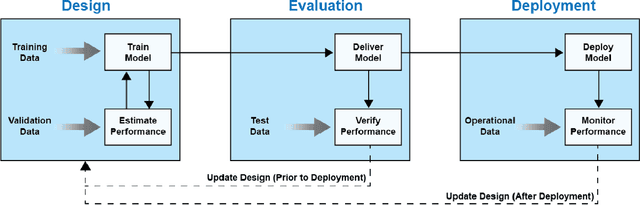
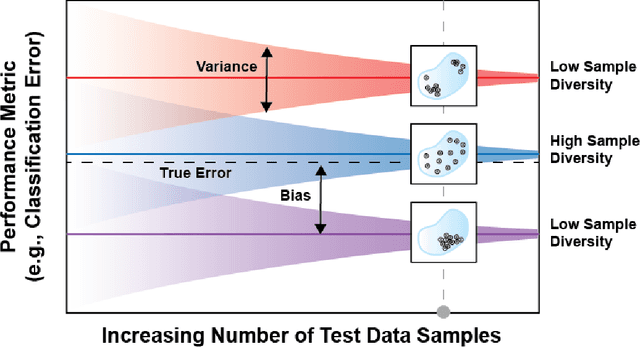
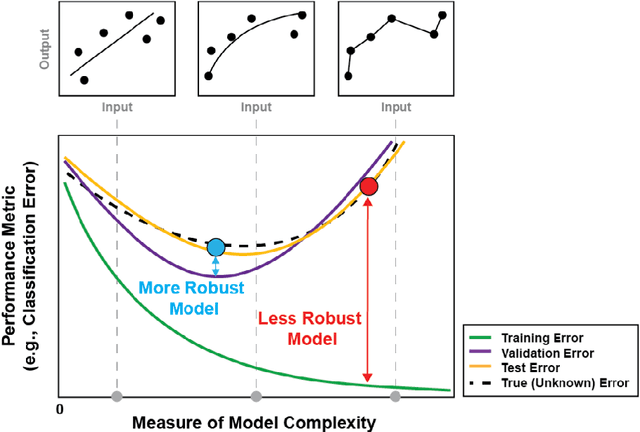
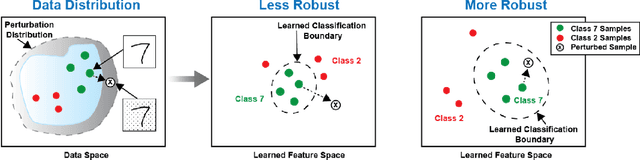
The Department of Defense (DoD) has significantly increased its investment in the design, evaluation, and deployment of Artificial Intelligence and Machine Learning (AI/ML) capabilities to address national security needs. While there are numerous AI/ML successes in the academic and commercial sectors, many of these systems have also been shown to be brittle and nonrobust. In a complex and ever-changing national security environment, it is vital that the DoD establish a sound and methodical process to evaluate the performance and robustness of AI/ML models before these new capabilities are deployed to the field. This paper reviews the AI/ML development process, highlights common best practices for AI/ML model evaluation, and makes recommendations to DoD evaluators to ensure the deployment of robust AI/ML capabilities for national security needs.
Real-time super-resolution mapping of locally anisotropic grain orientations for ultrasonic non-destructive evaluation of crystalline material
May 10, 2021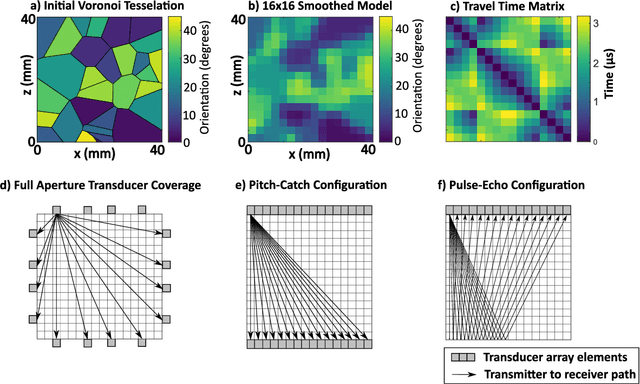
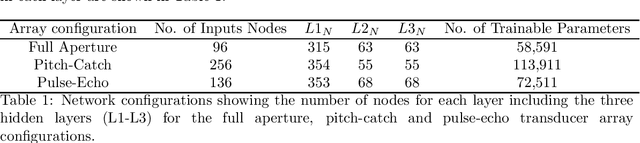
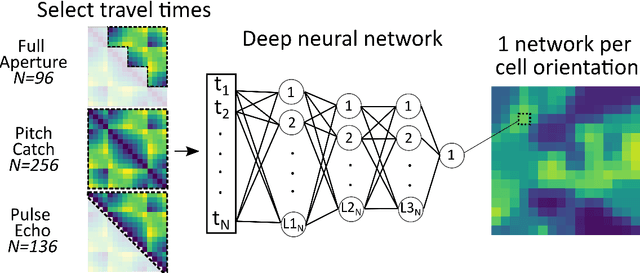
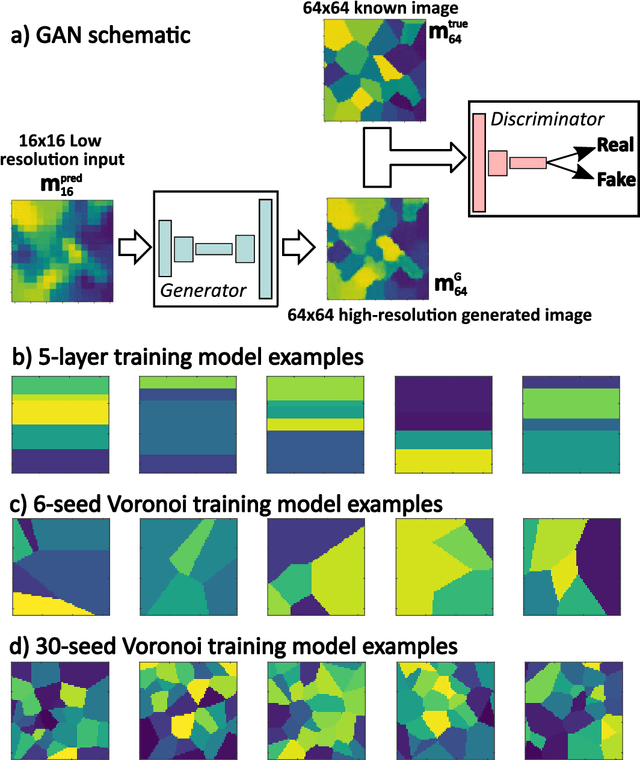
Estimating the spatially varying microstructures of heterogeneous and locally anisotropic media non-destructively is necessary for the accurate detection of flaws and reliable monitoring of manufacturing processes. Conventional algorithms used for solving this inverse problem come with significant computational cost, particularly in the case of high dimensional non-linear tomographic problems. In this paper, we propose a framework which uses deep neural networks (DNNs) with full aperture, pitch-catch and pulse-echo transducer configurations to reconstruct material maps of crystallographic orientation. We also present the first ever application of generative adversarial networks (GANs) to achieve super resolution of ultrasonic tomographic images, providing a factor-four increase in image resolution and up to a 50% increase in structural similarity. The importance of including appropriate prior knowledge in the GAN training dataset to increase inversion accuracy is highlighted; known information about the material's structure should be present in the training data. We show that after a computationally expensive training process, the DNNs and GANs can be used in less that one second (0.9 seconds on a standard desktop computer) to provide a high resolution map of the material's grain orientations.