 Add to Chrome
 Add to Firefox
 Add to Edge
Spatial Upper Bound of Radiated Power in Active Antenna Systems
Apr 01, 2026
The assessment of unwanted radiated emissions from Active Antenna Systems (AAS) has become a critical issue in adjacent-band coexistence scenarios. In this paper, we establish the existence of a deterministic spatial upper bound on the radiated power of active antenna arrays. We show that the maximum radiated power always occurs in the boresight direction, irrespective of frequency or signal nature (useful signal, nonlinear distortion, or noise), or instantaneous beamforming configuration, thereby defining a conservative spatial upper bound whose angular envelope is solely determined by the elementary radiating building block of the antenna architecture, i.e., the element or sub-array radiation pattern. Starting from a two-element array with third-order nonlinearities, we derive the spatial envelope and extend the result to realistic AAS architectures. The theoretical findings are validated by over-the-air (OTA) measurements performed on a 3.5 GHz Massive Multiple-Input Multiple-Output (MIMO) antenna. The proposed approach offers a simple, robust, and measurement-oriented methodology for coexistence assessments involving beamformed radio systems.

Large language models are not about natural language
Dec 15, 2025Large Language Models are useless for linguistics, as they are probabilistic models that require a vast amount of data to analyse externalized strings of words. In contrast, human language is underpinned by a mind-internal computational system that recursively generates hierarchical thought structures. The language system grows with minimal external input and can readily distinguish between real language and impossible languages.
False perspectives on human language: why statistics needs linguistics
Feb 17, 2023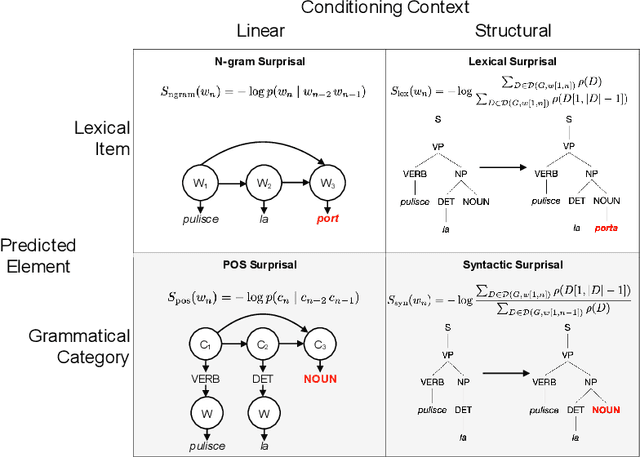
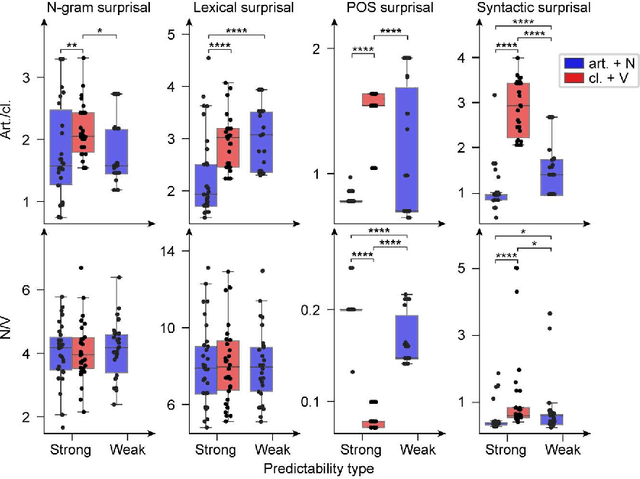
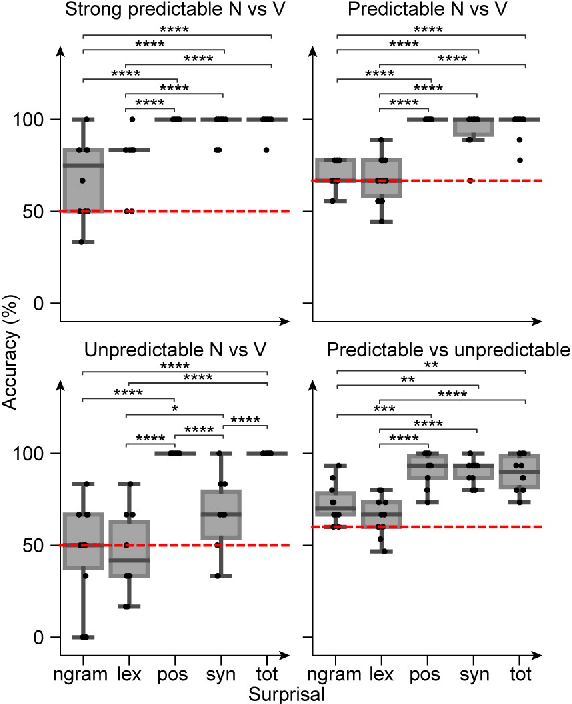
A sharp tension exists about the nature of human language between two opposite parties: those who believe that statistical surface distributions, in particular using measures like surprisal, provide a better understanding of language processing, vs. those who believe that discrete hierarchical structures implementing linguistic information such as syntactic ones are a better tool. In this paper, we show that this dichotomy is a false one. Relying on the fact that statistical measures can be defined on the basis of either structural or non-structural models, we provide empirical evidence that only models of surprisal that reflect syntactic structure are able to account for language regularities.