 Add to Chrome
 Add to Firefox
 Add to Edge
The impact of machine learning forecasting on strategic decision-making for Bike Sharing Systems
Mar 16, 2026
In this paper, machine learning techniques are used to forecast the difference between bike returns and withdrawals at each station of a bike sharing system. The forecasts are integrated into a simulation framework that is used to support long-term decisions and model the daily dynamics, including the relocation of bikes. We assess the quality of the machine learning-based forecasts in two ways. Firstly, we compare the forecasts with alternative prediction methods. Secondly, we analyze the impact of the forecasts on the quality of the output of the simulation framework. The evaluation is based on real-world data of the bike sharing system currently operating in Brescia, Italy.

Evaluating deep learning models for fault diagnosis of a rotating machinery with epistemic and aleatoric uncertainty
Dec 25, 2024
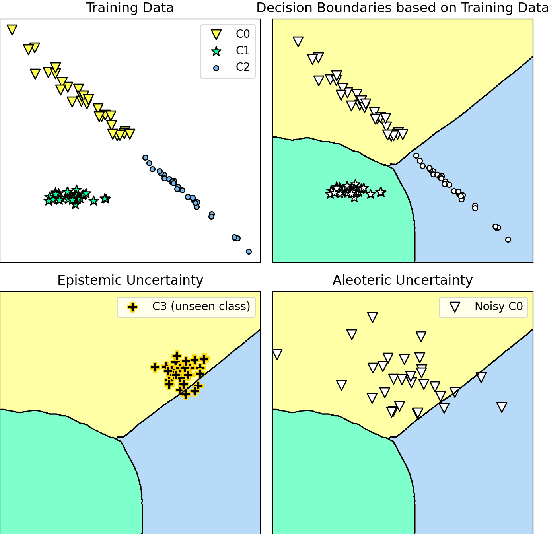
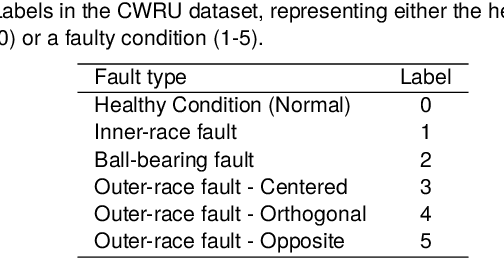
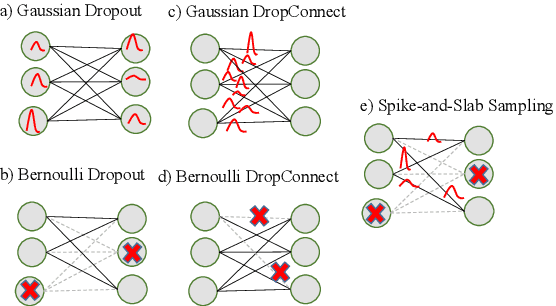
Uncertainty-aware deep learning (DL) models recently gained attention in fault diagnosis as a way to promote the reliable detection of faults when out-of-distribution (OOD) data arise from unseen faults (epistemic uncertainty) or the presence of noise (aleatoric uncertainty). In this paper, we present the first comprehensive comparative study of state-of-the-art uncertainty-aware DL architectures for fault diagnosis in rotating machinery, where different scenarios affected by epistemic uncertainty and different types of aleatoric uncertainty are investigated. The selected architectures include sampling by dropout, Bayesian neural networks, and deep ensembles. Moreover, to distinguish between in-distribution and OOD data in the different scenarios two uncertainty thresholds, one of which is introduced in this paper, are alternatively applied. Our empirical findings offer guidance to practitioners and researchers who have to deploy real-world uncertainty-aware fault diagnosis systems. In particular, they reveal that, in the presence of epistemic uncertainty, all DL models are capable of effectively detecting, on average, a substantial portion of OOD data across all the scenarios. However, deep ensemble models show superior performance, independently of the uncertainty threshold used for discrimination. In the presence of aleatoric uncertainty, the noise level plays an important role. Specifically, low noise levels hinder the models' ability to effectively detect OOD data. Even in this case, however, deep ensemble models exhibit a milder degradation in performance, dominating the others. These achievements, combined with their shorter inference time, make deep ensemble architectures the preferred choice.