 Add to Chrome
 Add to Firefox
 Add to Edge
Beyond Point Targets: Experimental Analysis of Frequency Anisotropy for Multi-band ISAC in FR3
Jul 23, 2026
As Integrated Sensing And Communication (ISAC) systems push toward higher sensing resolution, multi-band processing has emerged as a key enabler, with Frequency Range 3 (FR3) (7-24 GHz) standing out for its combination of wide bandwidth and favorable propagation. A common assumption underlying existing multi-band ISAC techniques is that targets behave as frequency-invariant point scatterers, enabling coherent combination of measurements across widely spaced subbands. However, this assumption does not hold over wide fractional bandwidths, since real objects exhibit frequency-dependent scattering mechanisms and migrating scattering centers. This paper provides the first systematic experimental characterization of the frequency anisotropy of everyday objects for ISAC, using channel measurements collected with a calibrated vector network analyzer over the 6-24 GHz band, across 10 objects and 120 viewpoints. We process bistatic channel impulse responses and synthetic aperture radar images to quantify multi-band coherence, extracting the real part of the cross-band correlation coefficient. Our results reveal complex, non-trivial coherence structures that vary substantially with object type and viewing angle, highlighting the need to account for frequency anisotropy in multi-band ISAC system design.

Millimeter-Scale Absolute Carrier Phase-Based Localization in Multi-Band Systems
Nov 07, 2025Localization is a key feature of future Sixth Generation (6G) net-works with foreseen accuracy requirements down to the millimeter level, to enable novel applications in the fields of telesurgery, high-precision manufacturing, and others. Currently, such accuracy requirements are only achievable with specialized or highly resource-demanding systems, rendering them impractical for more wide-spread deployment. In this paper, we present the first system that enables low-complexity and low-bandwidth absolute 3D localization with millimeter-level accuracy in generic wireless networks. It performs a carrier phase-based wireless localization refinement of an initial location estimate based on successive location-likelihood optimization across multiple bands. Unlike previous phase unwrapping methods, our solution is one-shot. We evaluate its performance collecting ~350, 000 measurements, showing an improvement of more than one order of magnitude over classical localization techniques. Finally, we will open-source the low-cost, modular FR3 front-end that we developed for the experimental campaign.
Low-complexity hardware and algorithm for joint communication and sensing
Sep 13, 2023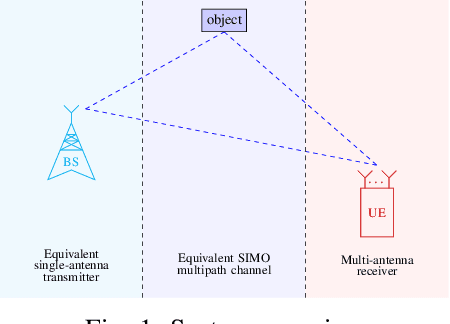

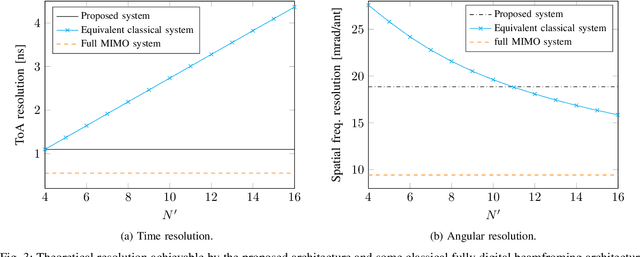
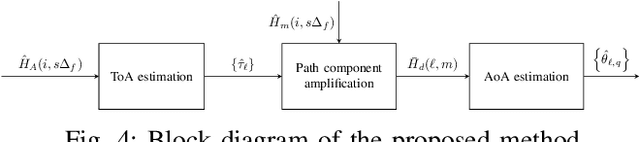
Joint Communication and Sensing (JCAS) is foreseen as one very distinctive feature of the emerging 6G systems providing, in addition to fast end reliable communication, the ability to obtain an accurate perception of the physical environment. In this paper, we propose a JCAS algorithm that exploits a novel beamforming architecture, which features a combination of wideband analog and narrowband digital beamforming. This allows accurate estimation of Time of Arrival (ToA), exploiting the large bandwidth and Angle of Arrival (AoA), exploiting the high-rank digital beamforming. In our proposal, we separately estimate the ToA and AoA. The association between ToA and AoA is solved by acquiring multiple non-coherent frames and adding up the signal from each frame such that a specific component is combined coherently before the AoA estimation. Consequently, this removes the need to use 2D and 3D joint estimation methods, thus significantly lowering complexity. The resolution performance of the method is compared with that of 2D MUltiple SIgnal Classification (2D-MUSIC) algorithm, using a fully-digital wideband beamforming architecture. The results show that the proposed method can achieve performance similar to a fully-digital high-bandwidth system, while requiring a fraction of the total aggregate sampling rate and having much lower complexity.