 Add to Chrome
 Add to Firefox
 Add to Edge
Social Choice Optimization
Aug 04, 2020
Social choice is the theory about collective decision towards social welfare starting from individual opinions, preferences, interests or welfare. The field of Computational Social Welfare is somewhat recent and it is gaining impact in the Artificial Intelligence Community. Classical literature makes the assumption of single-peaked preferences, i.e. there exist a order in the preferences and there is a global maximum in this order. This year some theoretical results were published about Two-stage Approval Voting Systems (TAVs), Multi-winner Selection Rules (MWSR) and Incomplete (IPs) and Circular Preferences (CPs). The purpose of this paper is three-fold: Firstly, I want to introduced Social Choice Optimisation as a generalisation of TAVs where there is a max stage and a min stage implementing thus a Minimax, well-known Artificial Intelligence decision-making rule to minimize hindering towards a (Social) Goal. Secondly, I want to introduce, following my Open Standardization and Open Integration Theory (in refinement process) put in practice in my dissertation, the Open Standardization of Social Inclusion, as a global social goal of Social Choice Optimization.

Towards Regulated Deep Learning
Dec 31, 2019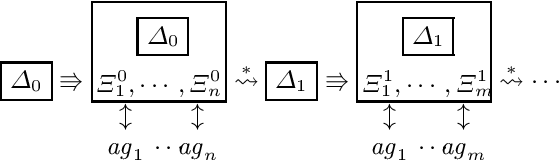

Regulation of Multi-Agent Systems (MAS) was a research topic of the past decade and one of these proposals was Electronic Institutions. However, with the recent reformulation of Artificial Neural Networks (ANN) as Deep Learning (DL), Security, Privacy, Ethical and Legal issues regarding the use of DL has raised concerns in the Artificial Intelligence (AI) Community. Now that the Regulation of MAS is almost correctly addressed, we propose the Regulation of ANN as Agent-based Training of a special type of regulated ANN that we call Institutional Neural Network. This paper introduces the former concept and provides $\mathcal{I}$, a language previously used to model and extend Electronic Institutions, as a means to implement and regulate DL.