 Add to Chrome
 Add to Firefox
 Add to Edge
Faithfulness to Refusal: A Causal Audit of Neuron Selectors
Jul 06, 2026
Attribution scores increasingly identify which neuron rows of a language model matter for applications such as pruning, interpretability, and editing for safety, yet whether they identify causally important rows is rarely tested directly. We address this with two paired audits built on one-shot neuron-row zeroing. We first audit selectors at the language-modeling level: attribution methods substantially outperform activation and magnitude-based baselines at identifying dispensable rows across five LLMs. We then adapt the same intervention into a behavior test by driving it with a contrastive harmful-versus-benign signal; the attributed rows are sufficient to install refusal on hate and crime while keeping benign over-refusal low and preserving language model fluency, and specific in that layer-matched random controls at the same depths fail. Highly rank-stable selectors can be among the least causally valid. Refusal moreover lives in a redundant subspace, where different attribution methods install it through largely disjoint row sets, so the recovered edit is one realization of a sufficient set rather than a unique mechanism. Together, these findings show that rank-stability proxies miss the kinds of selector failures a direct causal audit can surface.%

ViDAS: Vision-based Danger Assessment and Scoring
Oct 01, 2024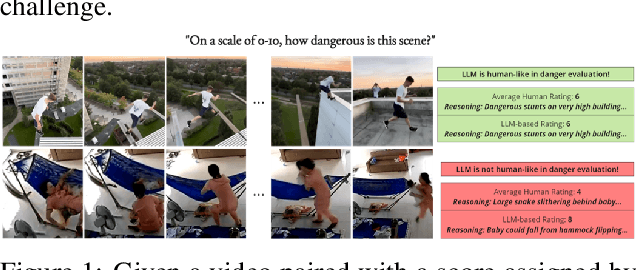
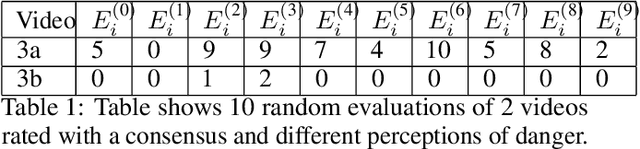

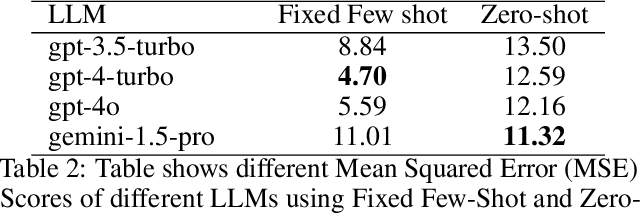
We present a novel dataset aimed at advancing danger analysis and assessment by addressing the challenge of quantifying danger in video content and identifying how human-like a Large Language Model (LLM) evaluator is for the same. This is achieved by compiling a collection of 100 YouTube videos featuring various events. Each video is annotated by human participants who provided danger ratings on a scale from 0 (no danger to humans) to 10 (life-threatening), with precise timestamps indicating moments of heightened danger. Additionally, we leverage LLMs to independently assess the danger levels in these videos using video summaries. We introduce Mean Squared Error (MSE) scores for multimodal meta-evaluation of the alignment between human and LLM danger assessments. Our dataset not only contributes a new resource for danger assessment in video content but also demonstrates the potential of LLMs in achieving human-like evaluations.