 Add to Chrome
 Add to Firefox
 Add to Edge
TOC-SR: Task-Optimal Compact diffusion for Image Super Resolution
May 04, 2026
Diffusion models have recently demonstrated strong performance for image restoration tasks, including super-resolution. However, their large model size and iterative sampling procedures make them computationally expensive for practical deployment. In this work, we present TOC-SR, a framework for building efficient one-step super-resolution models by first discovering a compact diffusion backbone. Starting from a sixteen-channel latent diffusion model, we construct parameter-efficient surrogate blocks using feature-wise generative distillation and perform architecture discovery using epsilon-constrained Bayesian Optimization to minimize model complexity while preserving generative fidelity. The resulting compact diffusion backbone achieves a 6.6x reduction in parameters and a 2.8x reduction in GMACs compared to the expanded diffusion model. We then adapt this backbone for super-resolution and distill the diffusion process into a single-step generator. Experiments demonstrate that the proposed approach enables efficient super-resolution while maintaining strong reconstruction quality.

LLVD: LSTM-based Explicit Motion Modeling in Latent Space for Blind Video Denoising
Jan 10, 2025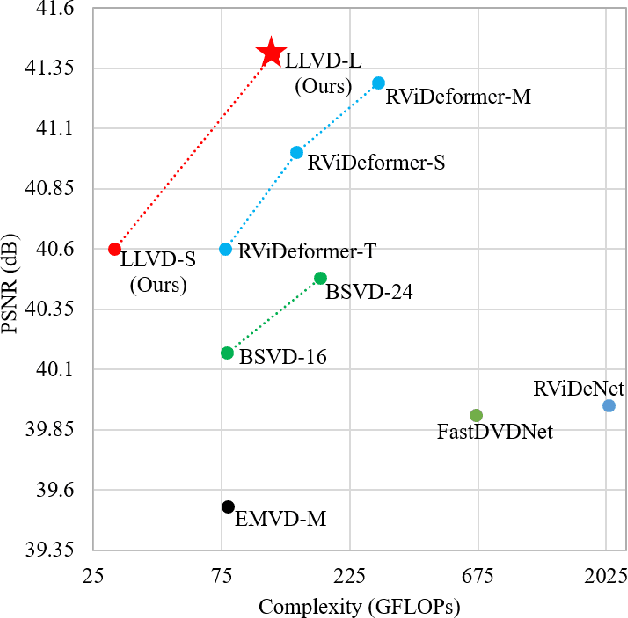
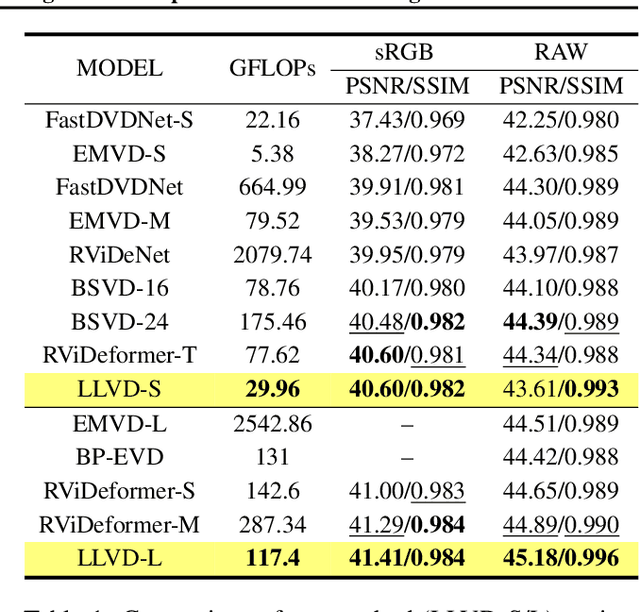
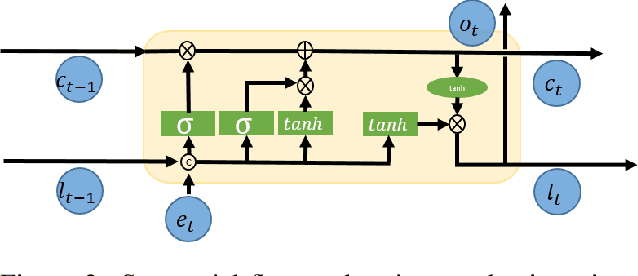
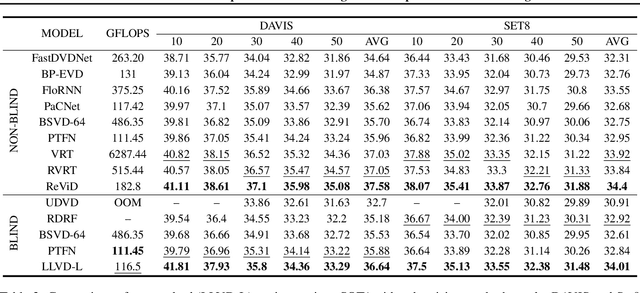
Video restoration plays a pivotal role in revitalizing degraded video content by rectifying imperfections caused by various degradations introduced during capturing (sensor noise, motion blur, etc.), saving/sharing (compression, resizing, etc.) and editing. This paper introduces a novel algorithm designed for scenarios where noise is introduced during video capture, aiming to enhance the visual quality of videos by reducing unwanted noise artifacts. We propose the Latent space LSTM Video Denoiser (LLVD), an end-to-end blind denoising model. LLVD uniquely combines spatial and temporal feature extraction, employing Long Short Term Memory (LSTM) within the encoded feature domain. This integration of LSTM layers is crucial for maintaining continuity and minimizing flicker in the restored video. Moreover, processing frames in the encoded feature domain significantly reduces computations, resulting in a very lightweight architecture. LLVD's blind nature makes it versatile for real, in-the-wild denoising scenarios where prior information about noise characteristics is not available. Experiments reveal that LLVD demonstrates excellent performance for both synthetic and captured noise. Specifically, LLVD surpasses the current State-Of-The-Art (SOTA) in RAW denoising by 0.3dB, while also achieving a 59\% reduction in computational complexity.