 Add to Chrome
 Add to Firefox
 Add to Edge
Evolving Layer-Specific Scalar Functions for Hardware-Aware Transformer Adaptation
May 13, 2026
Vision Transformers (ViTs) achieve state-of-the-art performance on challenging vision tasks, but their deployment on edge devices is severely hindered by the computational complexity and global reduction bottleneck imposed by layer normalization. Recent methods attempt to bypass this by replacing normalization layers with hardware-friendly scalar approximations. However, these homogeneous replacements do not optimally fit to all layers' behaviour and rely on expensive model retraining. In this work, we propose a highly efficient, hardware-aware framework that utilizes genetic programming (GP) to evolve heterogeneous, layer-specific scalar functions directly from pre-trained weights. Coupled with a novel post-training re-alignment strategy, our approach eliminates the need to retrain models from scratch entirely. Our evolved expressions accurately approximate the target normalization behaviours, capturing $91.6\%$ of the variance ($R^2$) compared to only $70.2\%$ for homogeneous baselines, allowing our modified architecture to recover $84.25\%$ Top-1 ImageNet-1K accuracy in only 20 epochs. By preserving this performance while eliminating the global reduction bottleneck, our approach establishes a highly favourable trade-off between arithmetic complexity and off-chip memory traffic, removing a primary barrier to the efficient deployment of ViTs on edge accelerators.

Real-Time Decorrelation-Based Anomaly Detection for Multivariate Time Series
Jul 10, 2025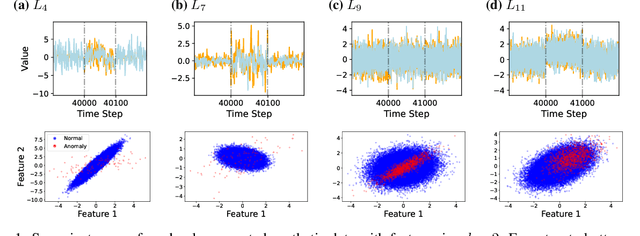
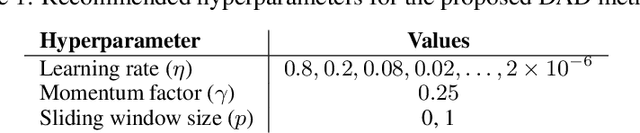
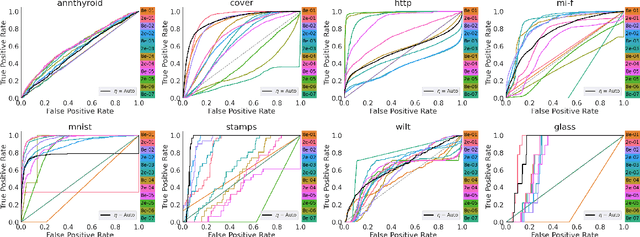
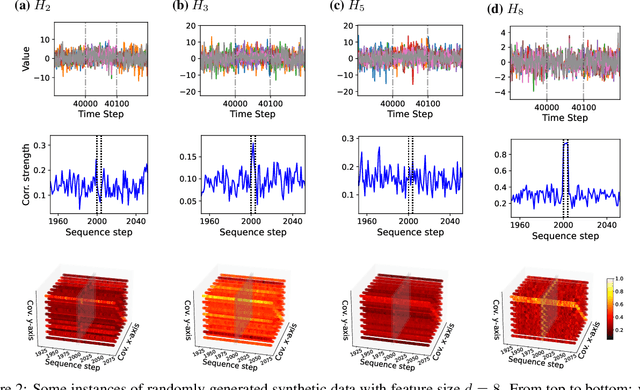
Anomaly detection (AD) plays a vital role across a wide range of real-world domains by identifying data instances that deviate from expected patterns, potentially signaling critical events such as system failures, fraudulent activities, or rare medical conditions. The demand for real-time AD has surged with the rise of the (Industrial) Internet of Things, where massive volumes of multivariate sensor data must be processed instantaneously. Real-time AD requires methods that not only handle high-dimensional streaming data but also operate in a single-pass manner, without the burden of storing historical instances, thereby ensuring minimal memory usage and fast decision-making. We propose DAD, a novel real-time decorrelation-based anomaly detection method for multivariate time series, based on an online decorrelation learning approach. Unlike traditional proximity-based or reconstruction-based detectors that process entire data or windowed instances, DAD dynamically learns and monitors the correlation structure of data sample by sample in a single pass, enabling efficient and effective detection. To support more realistic benchmarking practices, we also introduce a practical hyperparameter tuning strategy tailored for real-time anomaly detection scenarios. Extensive experiments on widely used benchmark datasets demonstrate that DAD achieves the most consistent and superior performance across diverse anomaly types compared to state-of-the-art methods. Crucially, its robustness to increasing dimensionality makes it particularly well-suited for real-time, high-dimensional data streams. Ultimately, DAD not only strikes an optimal balance between detection efficacy and computational efficiency but also sets a new standard for real-time, memory-constrained anomaly detection.