 Add to Chrome
 Add to Firefox
 Add to Edge
Enhancing Construction Worker Safety in Extreme Heat: A Machine Learning Approach Utilizing Wearable Technology for Predictive Health Analytics
Apr 21, 2026
Construction workers are highly vulnerable to heat stress, yet tools that translate real-time physiological data into actionable safety intelligence remain scarce. This study addresses this gap by developing and evaluating deep learning models, specifically a baseline Long Short-Term Memory (LSTM) network and an attention-based LSTM, to predict heat stress among 19 workers in Saudi Arabia. Using Garmin Vivosmart 5 smartwatches to monitor metrics such as heart rate, HRV, and oxygen saturation, the attention-based model outperformed the baseline, achieving 95.40% testing accuracy and significantly reducing false positives and negatives. With precision, recall, and F1 scores of 0.982, this approach not only improves predictive performance but also offers interpretable results suitable for integration into IoT-enabled safety systems and BIM dashboards, advancing proactive, informatics-driven safety management in the construction industry.

Fully Dense UNet for 2D Sparse Photoacoustic Tomography Artifact Removal
Sep 10, 2018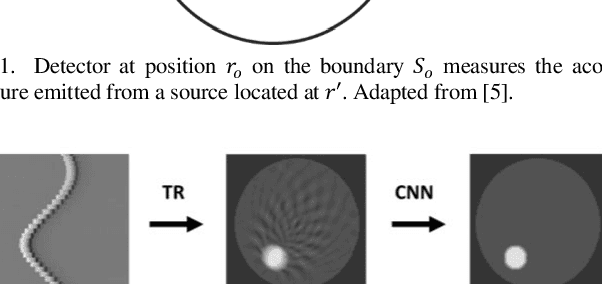
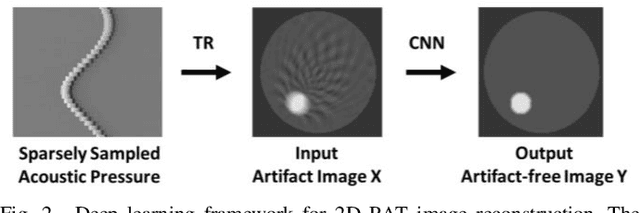
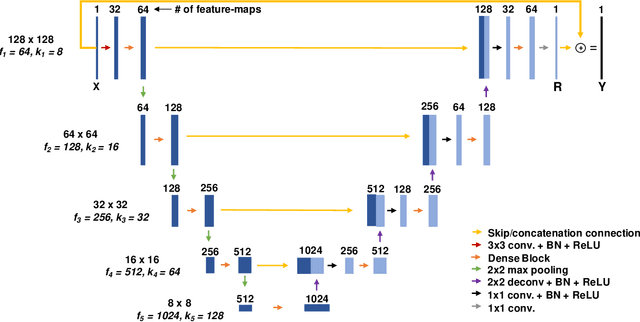
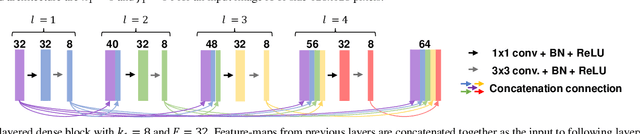
Photoacoustic imaging is an emerging imaging modality that is based upon the photoacoustic effect. In photoacoustic tomography (PAT), the induced acoustic pressure waves are measured by an array of detectors and used to reconstruct an image of the initial pressure distribution. A common challenge faced in PAT is that the measured acoustic waves can only be sparsely sampled. Reconstructing sparsely sampled data using standard methods results in severe artifacts that obscure information within the image. We propose a novel convolutional neural network (CNN) architecture termed Fully Dense UNet (FD-UNet) for removing artifacts from 2D PAT images reconstructed from sparse data and compare the proposed CNN with the standard UNet in terms of reconstructed image quality.