 Add to Chrome
 Add to Firefox
 Add to Edge
Broken Gates: Re-evaluating Web Bot Defenses in the Age of LLM Agents
Jul 21, 2026
LLM-based browser agents are rapidly changing the threat landscape for web security. Unlike traditional automation frameworks that execute predefined scripts, these agents can autonomously navigate websites, reason about page content, and interact with web interfaces using natural-language instructions. This evolution raises fundamental questions about the effectiveness of bot management systems, widely deployed to defend against automated web abuse. In this paper, we present a systematic measurement study evaluating the resilience of both interactive challenge-based defenses and non-interactive trust-based defenses against two attacker classes: commercial Captcha-solving services and LLM-based browser agents. Our evaluation spans seven solver services and six agents, including cloud-hosted, self-hosted, AI-assisted, and browser-extension configurations, tested against hCaptcha, reCaptcha v2, reCaptcha v3, and Cloudflare Turnstile. Our results show that challenge-based defenses are broadly ineffective against commercial solvers, which achieve near-perfect bypass at negligible cost. The challenges can similarly be defeated by LLM-based agents when a dedicated solver module is available. Non-interactive defenses such as reCaptcha v3 exhibit stronger resistance, but our analysis reveals that this resilience does not reflect a fundamental security property. Through fine-grained interaction trace analysis, we find that two agents with nearly indistinguishable behavioral footprints yield divergent outcomes, one bypassing the defense and one failing, isolating execution-environment authenticity, rather than agent behavior, as the determining factor. These findings suggest that the security boundary of non-interactive defenses lies at the environment layer, with significant implications for how bot management systems are designed and evaluated.

In-Application Defense Against Evasive Web Scans through Behavioral Analysis
Dec 09, 2024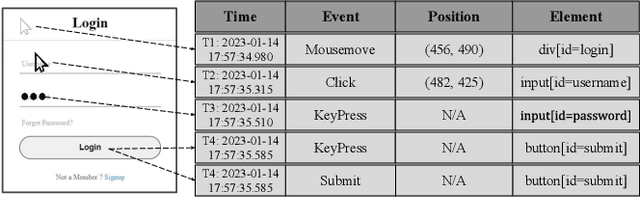
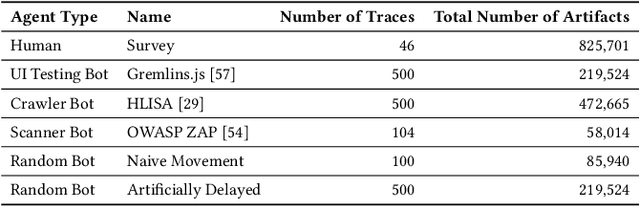
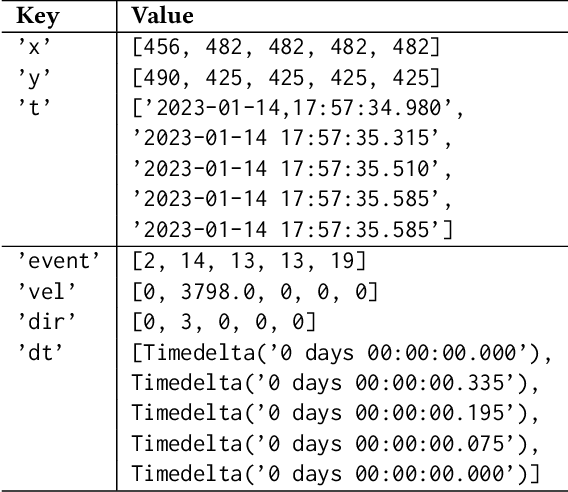
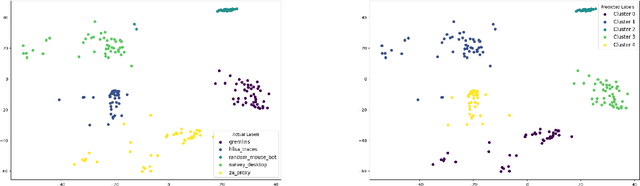
Web traffic has evolved to include both human users and automated agents, ranging from benign web crawlers to adversarial scanners such as those capable of credential stuffing, command injection, and account hijacking at the web scale. The estimated financial costs of these adversarial activities are estimated to exceed tens of billions of dollars in 2023. In this work, we introduce WebGuard, a low-overhead in-application forensics engine, to enable robust identification and monitoring of automated web scanners, and help mitigate the associated security risks. WebGuard focuses on the following design criteria: (i) integration into web applications without any changes to the underlying software components or infrastructure, (ii) minimal communication overhead, (iii) capability for real-time detection, e.g., within hundreds of milliseconds, and (iv) attribution capability to identify new behavioral patterns and detect emerging agent categories. To this end, we have equipped WebGuard with multi-modal behavioral monitoring mechanisms, such as monitoring spatio-temporal data and browser events. We also design supervised and unsupervised learning architectures for real-time detection and offline attribution of human and automated agents, respectively. Information theoretic analysis and empirical evaluations are provided to show that multi-modal data analysis, as opposed to uni-modal analysis which relies solely on mouse movement dynamics, significantly improves time-to-detection and attribution accuracy. Various numerical evaluations using real-world data collected via WebGuard are provided achieving high accuracy in hundreds of milliseconds, with a communication overhead below 10 KB per second.
EnSolver: Uncertainty-Aware CAPTCHA Solver Using Deep Ensembles
Jul 27, 2023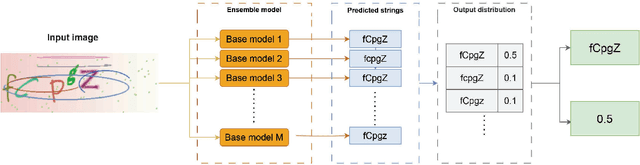
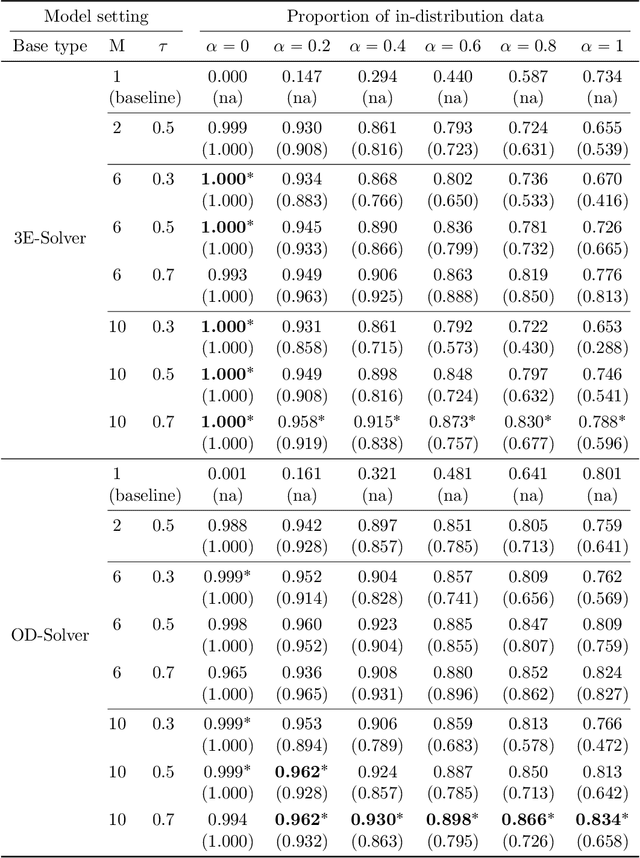
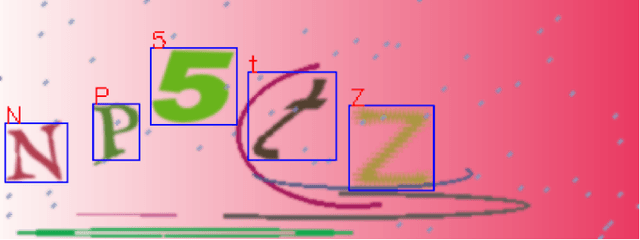
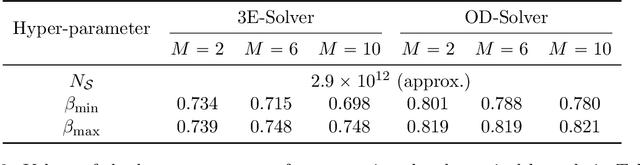
The popularity of text-based CAPTCHA as a security mechanism to protect websites from automated bots has prompted researches in CAPTCHA solvers, with the aim of understanding its failure cases and subsequently making CAPTCHAs more secure. Recently proposed solvers, built on advances in deep learning, are able to crack even the very challenging CAPTCHAs with high accuracy. However, these solvers often perform poorly on out-of-distribution samples that contain visual features different from those in the training set. Furthermore, they lack the ability to detect and avoid such samples, making them susceptible to being locked out by defense systems after a certain number of failed attempts. In this paper, we propose EnSolver, a novel CAPTCHA solver that utilizes deep ensemble uncertainty estimation to detect and skip out-of-distribution CAPTCHAs, making it harder to be detected. We demonstrate the use of our solver with object detection models and show empirically that it performs well on both in-distribution and out-of-distribution data, achieving up to 98.1% accuracy when detecting out-of-distribution data and up to 93% success rate when solving in-distribution CAPTCHAs.