 Add to Chrome
 Add to Firefox
 Add to Edge
A Neuro-Symbolic Framework for Accountability in Public-Sector AI
Dec 16, 2025
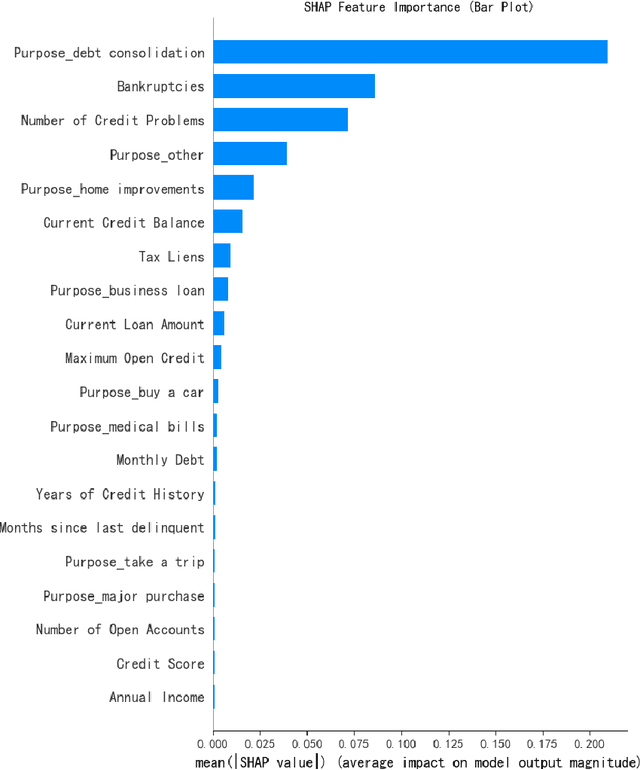
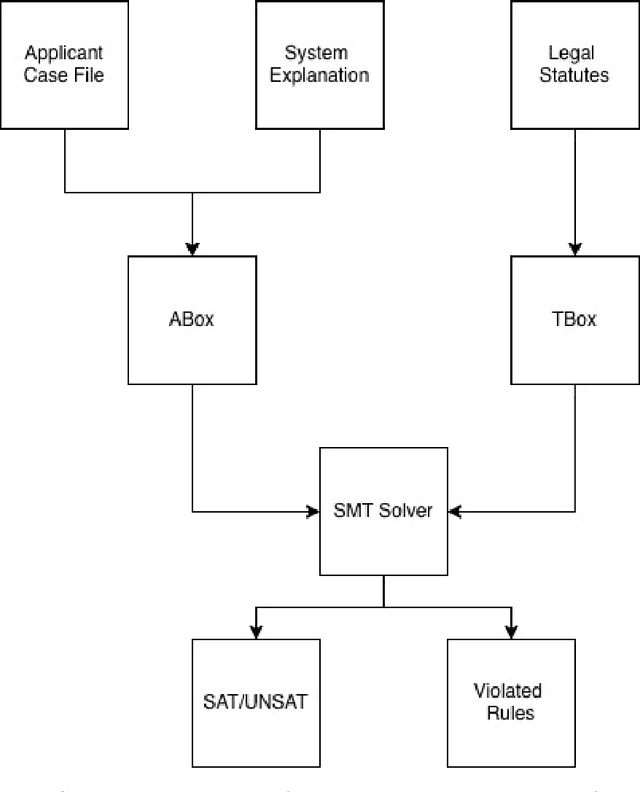
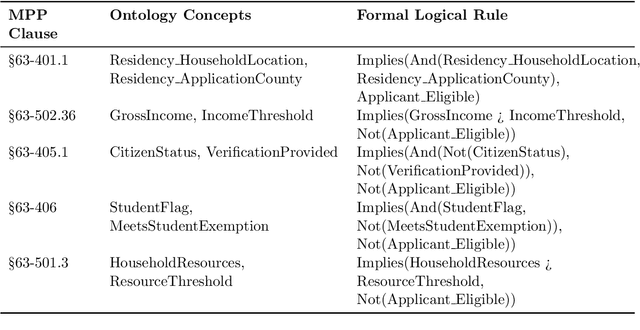
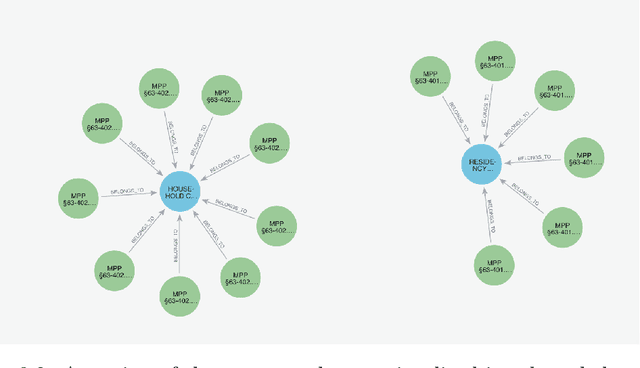
Automated eligibility systems increasingly determine access to essential public benefits, but the explanations they generate often fail to reflect the legal rules that authorize those decisions. This thesis develops a legally grounded explainability framework that links system-generated decision justifications to the statutory constraints of CalFresh, California's Supplemental Nutrition Assistance Program. The framework combines a structured ontology of eligibility requirements derived from the state's Manual of Policies and Procedures (MPP), a rule extraction pipeline that expresses statutory logic in a verifiable formal representation, and a solver-based reasoning layer to evaluate whether the explanation aligns with governing law. Case evaluations demonstrate the framework's ability to detect legally inconsistent explanations, highlight violated eligibility rules, and support procedural accountability by making the basis of automated determinations traceable and contestable.

StructuralDecompose: A Modular Framework for Robust Time Series Decomposition in R
Oct 06, 2025We present StructuralDecompose, an R package for modular and interpretable time series decomposition. Unlike existing approaches that treat decomposition as a monolithic process, StructuralDecompose separates the analysis into distinct components: changepoint detection, anomaly detection, smoothing, and decomposition. This design provides flexibility and robust- ness, allowing users to tailor methods to specific time series characteristics. We demonstrate the package on simulated and real-world datasets, benchmark its performance against state-of-the- art tools such as Rbeast and autostsm, and discuss its role in interpretable machine learning workflows.