 Add to Chrome
 Add to Firefox
 Add to Edge
Uncertainty Estimation in Pathology Foundation Models via Deep Mutual Learning
Jun 29, 2026
Pathology foundation models (PFMs) offer generalizable representations for whole-slide image (WSI) analysis, yet their clinical adoption remains limited. Specifically, their predictions lack reliable confidence estimates, and no single PFM is universally best across tasks, which severely undermines trust in medical settings. To overcome this, we propose $\mathtt{DICE}$, a plug-and-play framework that ensembles $K$ frozen PFMs and models their disagreement as a proxy for uncertainty estimation. To ensure this proxy yields meaningful estimates, we align the ensemble members via deep mutual learning, and theoretically show that this objective upper-bounds the model uncertainty. Additionally, we demonstrate that the ensemble's consensus localizes abnormalities at the patch level without any explicit supervision. We evaluate $\mathtt{DICE}$ on three challenging WSI benchmarks. Notably, our framework provides reliable uncertainty estimates that accurately flag failure-prone cases under in- and out-of-distribution settings, while matching or outperforming SOTA baselines in classification, calibration, and localization. Overall, $\mathtt{DICE}$ takes a crucial step toward translating PFMs into uncertainty-aware decision-support systems.

Automated Methods for Detection and Classification Pneumonia based on X-Ray Images Using Deep Learning
Mar 31, 2020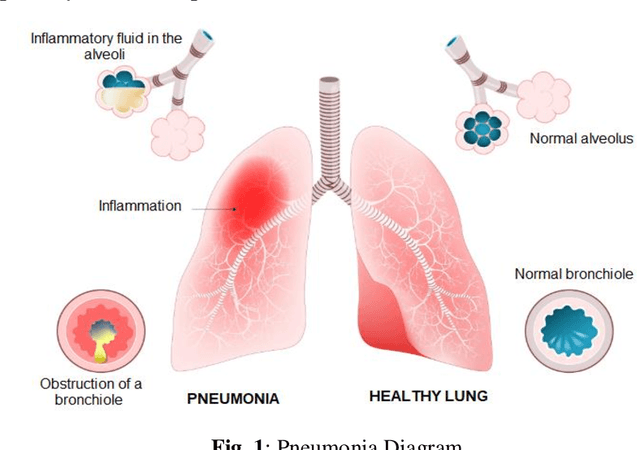
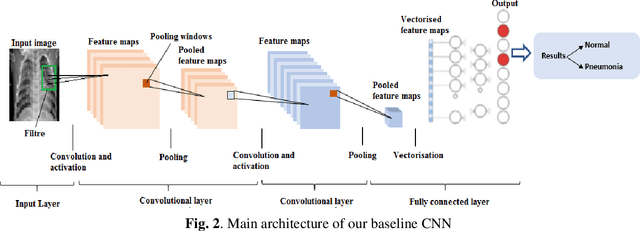
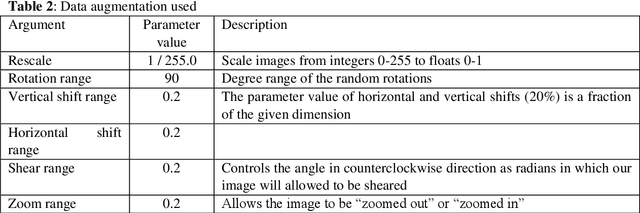
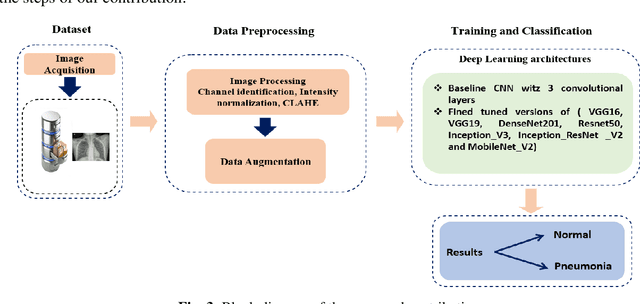
Recently, researchers, specialists, and companies around the world are rolling out deep learning and image processing-based systems that can fastly process hundreds of X-Ray and computed tomography (CT) images to accelerate the diagnosis of pneumonia such as SARS, COVID-19, and aid in its containment. Medical images analysis is one of the most promising research areas, it provides facilities for diagnosis and making decisions of a number of diseases such as MERS, COVID-19. In this paper, we present a comparison of recent Deep Convolutional Neural Network (DCNN) architectures for automatic binary classification of pneumonia images based fined tuned versions of (VGG16, VGG19, DenseNet201, Inception_ResNet_V2, Inception_V3, Resnet50, MobileNet_V2 and Xception). The proposed work has been tested using chest X-Ray & CT dataset which contains 5856 images (4273 pneumonia and 1583 normal). As result we can conclude that fine-tuned version of Resnet50, MobileNet_V2 and Inception_Resnet_V2 show highly satisfactory performance with rate of increase in training and validation accuracy (more than 96% of accuracy). Unlike CNN, Xception, VGG16, VGG19, Inception_V3 and DenseNet201 display low performance (more than 84% accuracy).
Applying Fuzzy ID3 Decision Tree for Software Effort Estimation
Nov 01, 2011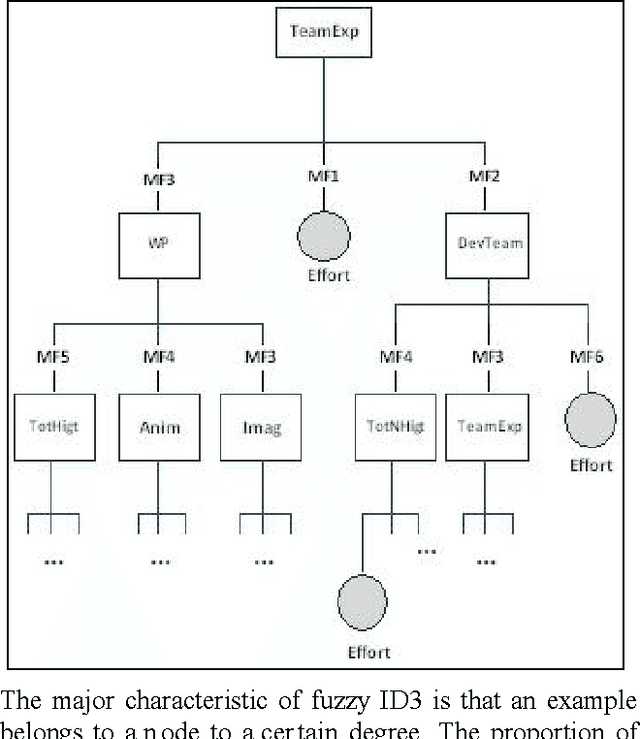
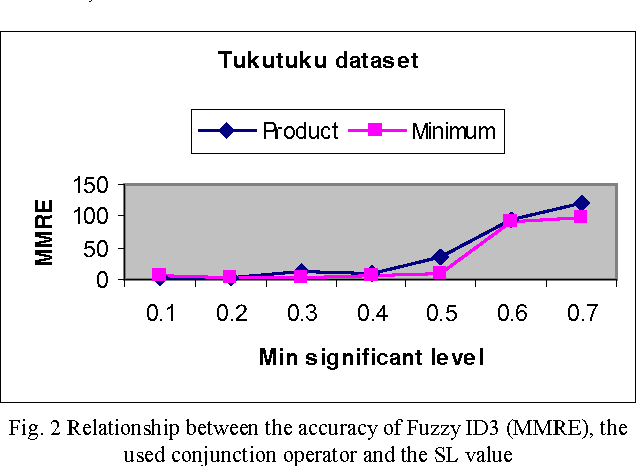
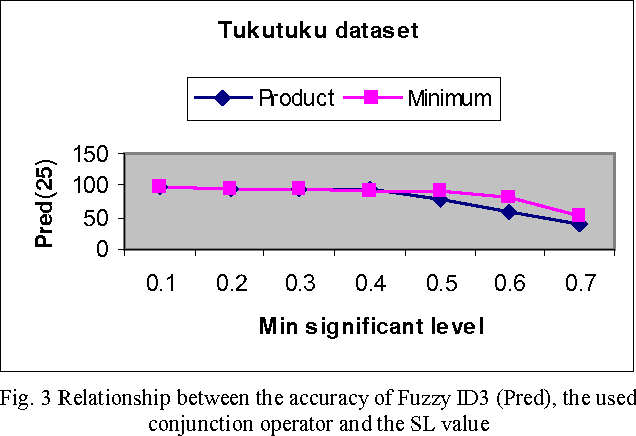
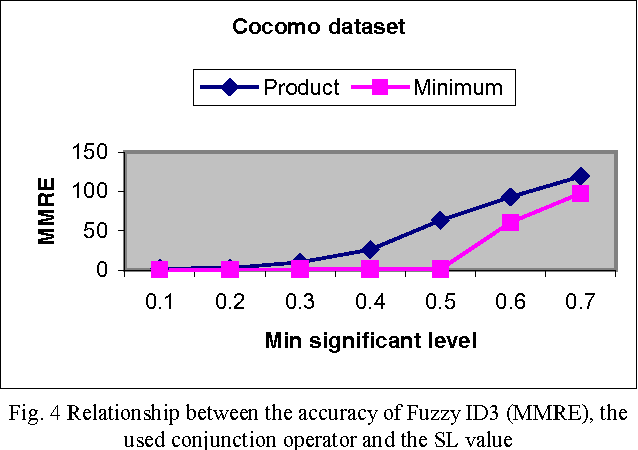
Web Effort Estimation is a process of predicting the efforts and cost in terms of money, schedule and staff for any software project system. Many estimation models have been proposed over the last three decades and it is believed that it is a must for the purpose of: Budgeting, risk analysis, project planning and control, and project improvement investment analysis. In this paper, we investigate the use of Fuzzy ID3 decision tree for software cost estimation; it is designed by integrating the principles of ID3 decision tree and the fuzzy set-theoretic concepts, enabling the model to handle uncertain and imprecise data when describing the software projects, which can improve greatly the accuracy of obtained estimates. MMRE and Pred are used as measures of prediction accuracy for this study. A series of experiments is reported using two different software projects datasets namely, Tukutuku and COCOMO'81 datasets. The results are compared with those produced by the crisp version of the ID3 decision tree.