 Add to Chrome
 Add to Firefox
 Add to Edge
Reliability by design: quantifying and eliminating fabrication risk in LLMs. From generative to consultative AI: a comparative analysis in the legal domain and lessons for high-stakes knowledge bases
Jan 21, 2026
This paper examines how to make large language models reliable for high-stakes legal work by reducing hallucinations. It distinguishes three AI paradigms: (1) standalone generative models ("creative oracle"), (2) basic retrieval-augmented systems ("expert archivist"), and (3) an advanced, end-to-end optimized RAG system ("rigorous archivist"). The authors introduce two reliability metrics -False Citation Rate (FCR) and Fabricated Fact Rate (FFR)- and evaluate 2,700 judicial-style answers from 12 LLMs across 75 legal tasks using expert, double-blind review. Results show that standalone models are unsuitable for professional use (FCR above 30%), while basic RAG greatly reduces errors but still leaves notable misgrounding. Advanced RAG, using techniques such as embedding fine-tuning, re-ranking, and self-correction, reduces fabrication to negligible levels (below 0.2%). The study concludes that trustworthy legal AI requires rigor-focused, retrieval-based architectures emphasizing verification and traceability, and provides an evaluation framework applicable to other high-risk domains.

Topo-RAG: Topology-aware retrieval for hybrid text-table documents
Jan 15, 2026In enterprise datasets, documents are rarely pure. They are not just text, nor just numbers; they are a complex amalgam of narrative and structure. Current Retrieval-Augmented Generation (RAG) systems have attempted to address this complexity with a blunt tool: linearization. We convert rich, multidimensional tables into simple Markdown-style text strings, hoping that an embedding model will capture the geometry of a spreadsheet in a single vector. But it has already been shown that this is mathematically insufficient. This work presents Topo-RAG, a framework that challenges the assumption that "everything is text". We propose a dual architecture that respects the topology of the data: we route fluid narrative through traditional dense retrievers, while tabular structures are processed by a Cell-Aware Late Interaction mechanism, preserving their spatial relationships. Evaluated on SEC-25, a synthetic enterprise corpus that mimics real-world complexity, Topo-RAG demonstrates an 18.4% improvement in nDCG@10 on hybrid queries compared to standard linearization approaches. It's not just about searching better; it's about understanding the shape of information.
Inteligencia Artificial jurídica y el desafío de la veracidad: análisis de alucinaciones, optimización de RAG y principios para una integración responsable
Sep 11, 2025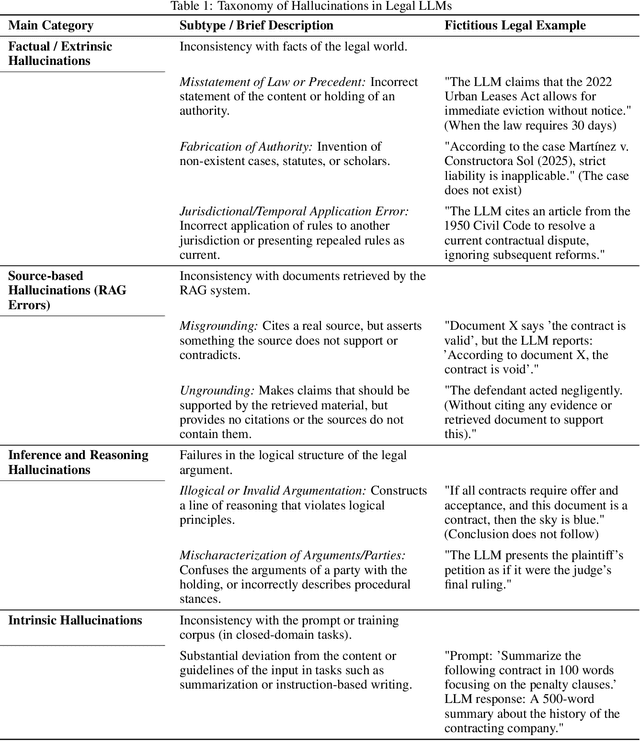
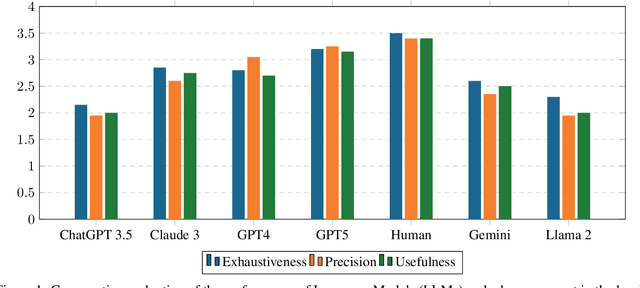
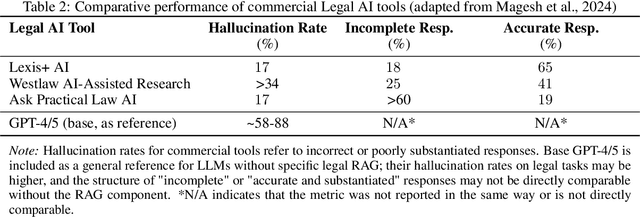
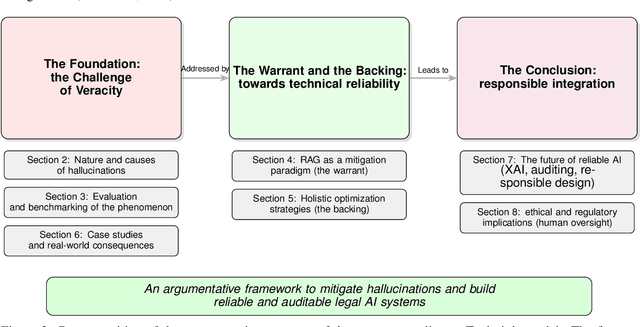
This technical report analyzes the challenge of "hallucinations" (false information) in LLMs applied to law. It examines their causes, manifestations, and the effectiveness of the RAG mitigation strategy, highlighting its limitations and proposing holistic optimizations. The paper explores the ethical and regulatory implications, emphasizing human oversight as an irreplaceable role. It concludes that the solution lies not in incrementally improving generative models, but in adopting a "consultative" AI paradigm that prioritizes veracity and traceability, acting as a tool to amplify, not replace, professional judgment. -- Este informe t\'ecnico analiza el desaf\'io de las "alucinaciones" (informaci\'on falsa) en los LLMs aplicados al derecho. Se examinan sus causas, manifestaciones y la efectividad de la estrategia de mitigaci\'on RAG, exponiendo sus limitaciones y proponiendo optimizaciones hol\'isticas. Se exploran las implicaciones \'eticas y regulatorias, enfatizando la supervisi\'on humana como un rol insustituible. El documento concluye que la soluci\'on no reside en mejorar incrementalmente los modelos generativos, sino en adoptar un paradigma de IA "consultiva" que priorice la veracidad y la trazabilidad, actuando como una herramienta para amplificar, y no sustituir, el juicio profesional.