 Add to Chrome
 Add to Firefox
 Add to Edge
Ride, Track, and Recover: Pilot Randomized Trial of a Wearable Digital Self-Management Intervention During a Veteran Endurance-Cycling Program
Jun 11, 2026
Post-traumatic stress disorder (PTSD) in veterans is characterized by persistent hyperarousal and comorbid anxiety and depressive symptoms that are difficult to monitor and manage outside clinical settings. Thirteen veterans participating in a Project Hero cycling event in Texas were randomized by computer-generated sequence in a naturalistic setting to two arms: (1) digital intervention plus physical activity, or (2) physical activity only, plus a third at-home monitoring control cohort consisting of 7 veterans selected from the broader Project Hero veteran community. Continuous smartwatch sensing combined heart rate and accelerometer features to detect hyperarousal events, which were confirmed in real time by participants. Weekly self-report measures of anxiety, depression, and PTSD severity were collected. Generalized additive mixed models characterized nonlinear trajectories over time. Baseline-normalized hyperarousal trajectories differed significantly across conditions, with the digital intervention group (n=7) showing structured stabilization compared to late-study escalation in the physical-only group (n=3). Both cycling groups exhibited acute symptom improvements during the endurance event; however, the digital intervention group demonstrated a higher overall maintenance of gains. The at-home control group (n=4) showed gradual symptom declines. Perceived precision of ML detections varied substantially across individuals and was positively associated with symptom severity, with higher-severity participants confirming a greater proportion of detected events. These results suggest that coupling wearable detection with digital self-management tools may support stabilization of hyperarousal and symptom improvement while emphasizing the importance of personalization and human-centered design in wearable mental health systems.

Real-Time Stress Monitoring, Detection, and Management in College Students: A Wearable Technology and Machine-Learning Approach
May 21, 2025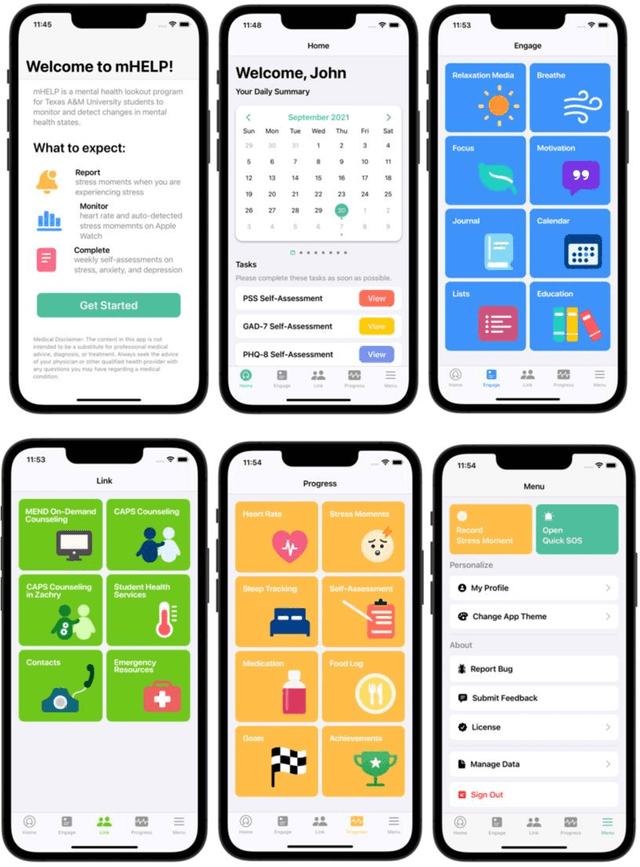
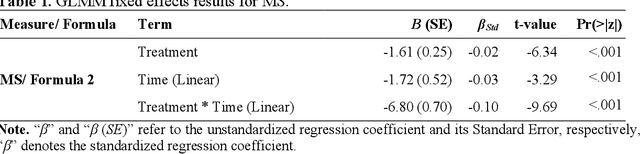
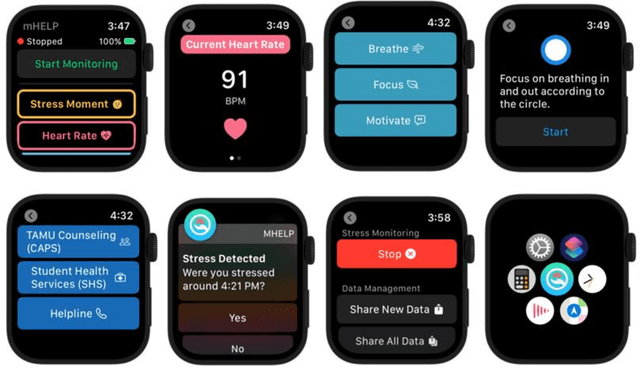
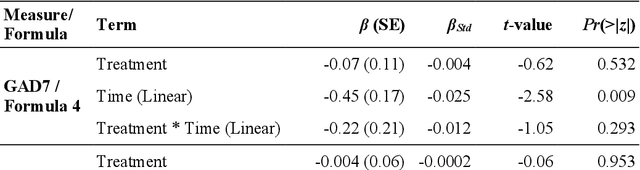
College students are increasingly affected by stress, anxiety, and depression, yet face barriers to traditional mental health care. This study evaluated the efficacy of a mobile health (mHealth) intervention, Mental Health Evaluation and Lookout Program (mHELP), which integrates a smartwatch sensor and machine learning (ML) algorithms for real-time stress detection and self-management. In a 12-week randomized controlled trial (n = 117), participants were assigned to a treatment group using mHELP's full suite of interventions or a control group using the app solely for real-time stress logging and weekly psychological assessments. The primary outcome, "Moments of Stress" (MS), was assessed via physiological and self-reported indicators and analyzed using Generalized Linear Mixed Models (GLMM) approaches. Similarly, secondary outcomes of psychological assessments, including the Generalized Anxiety Disorder-7 (GAD-7) for anxiety, the Patient Health Questionnaire (PHQ-8) for depression, and the Perceived Stress Scale (PSS), were also analyzed via GLMM. The finding of the objective measure, MS, indicates a substantial decrease in MS among the treatment group compared to the control group, while no notable between-group differences were observed in subjective scores of anxiety (GAD-7), depression (PHQ-8), or stress (PSS). However, the treatment group exhibited a clinically meaningful decline in GAD-7 and PSS scores. These findings underscore the potential of wearable-enabled mHealth tools to reduce acute stress in college populations and highlight the need for extended interventions and tailored features to address chronic symptoms like depression.