 Add to Chrome
 Add to Firefox
 Add to Edge
Severity Classification of Chronic Obstructive Pulmonary Disease in Intensive Care Units: A Semi-Supervised Approach Using MIMIC-III Dataset
Apr 24, 2025
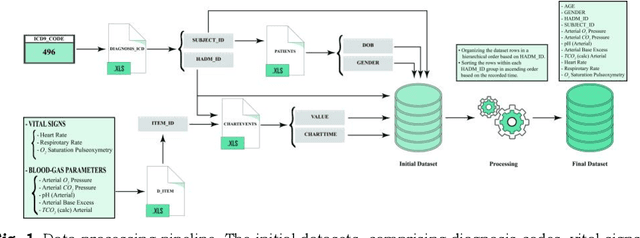


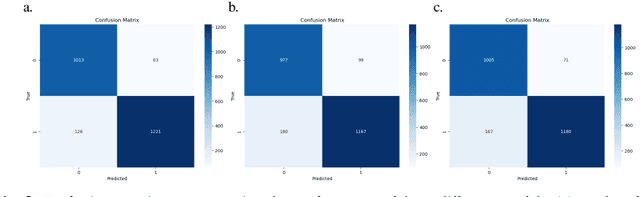
Chronic obstructive pulmonary disease (COPD) represents a significant global health burden, where precise severity assessment is particularly critical for effective clinical management in intensive care unit (ICU) settings. This study introduces an innovative machine learning framework for COPD severity classification utilizing the MIMIC-III critical care database, thereby expanding the applications of artificial intelligence in critical care medicine. Our research developed a robust classification model incorporating key ICU parameters such as blood gas measurements and vital signs, while implementing semi-supervised learning techniques to effectively utilize unlabeled data and enhance model performance. The random forest classifier emerged as particularly effective, demonstrating exceptional discriminative capability with 92.51% accuracy and 0.98 ROC AUC in differentiating between mild-to-moderate and severe COPD cases. This machine learning approach provides clinicians with a practical, accurate, and efficient tool for rapid COPD severity evaluation in ICU environments, with significant potential to improve both clinical decision-making processes and patient outcomes. Future research directions should prioritize external validation across diverse patient populations and integration with clinical decision support systems to optimize COPD management in critical care settings.

Towards Cognitive Load Assessment Using Electrooculography Measures
Dec 18, 2023Cognitive load assessment is crucial for understanding human performance in various domains. This study investigates the impact of different task conditions and time constraints on cognitive load using multiple measures, including subjective evaluations, performance metrics, and physiological eye-tracking data. Fifteen participants completed a series of primary and secondary tasks with different time limits. The NASA-TLX questionnaire, reaction time, inverse efficiency score, and eye-related features (blink, saccade, and fixation frequency) were utilized to assess cognitive load. The study results show significant differences in the level of cognitive load required for different tasks and when under time constraints. The study also found that there was a positive correlation (r = 0.331, p = 0.014) between how often participants blinked their eyes and the level of cognitive load required but a negative correlation (r = -0.290, p = 0.032) between how often participants made quick eye movements (saccades) and the level of cognitive load required. Additionally, the analysis revealed a significant negative correlation (r = -0.347, p = 0.009) and (r = -0.370, p = 0.005) between fixation and saccade frequencies under time constraints.