 Add to Chrome
 Add to Firefox
 Add to Edge
ASPECT:Analogical Semantic Policy Execution via Language Conditioned Transfer
Apr 09, 2026
Reinforcement Learning (RL) agents often struggle to generalize knowledge to new tasks, even those structurally similar to ones they have mastered. Although recent approaches have attempted to mitigate this issue via zero-shot transfer, they are often constrained by predefined, discrete class systems, limiting their adaptability to novel or compositional task variations. We propose a significantly more generalized approach, replacing discrete latent variables with natural language conditioning via a text-conditioned Variational Autoencoder (VAE). Our core innovation utilizes a Large Language Model (LLM) as a dynamic \textit{semantic operator} at test time. Rather than relying on rigid rules, our agent queries the LLM to semantically remap the description of the current observation to align with the source task. This source-aligned caption conditions the VAE to generate an imagined state compatible with the agent's original training, enabling direct policy reuse. By harnessing the flexible reasoning capabilities of LLMs, our approach achieves zero-shot transfer across a broad spectrum of complex and truly novel analogous tasks, moving beyond the limitations of fixed category mappings. Code and videos are available \href{https://anonymous.4open.science/r/ASPECT-85C3/}{here}.

Personalisation via Dynamic Policy Fusion
Sep 30, 2024
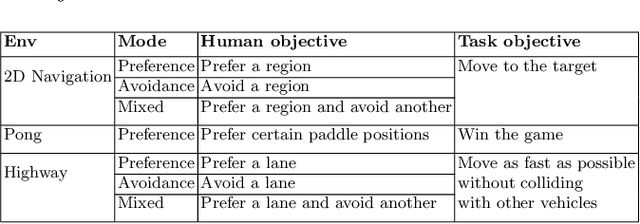
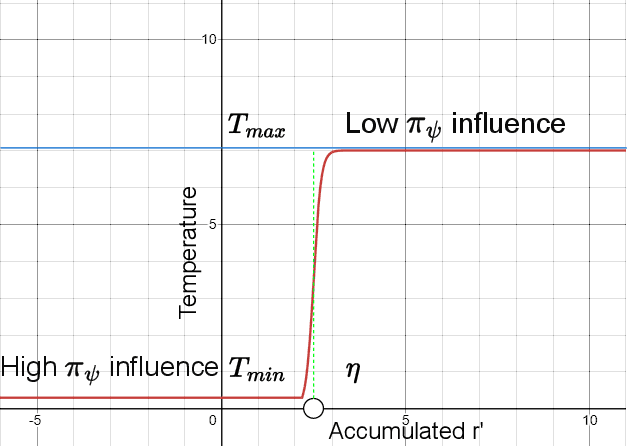
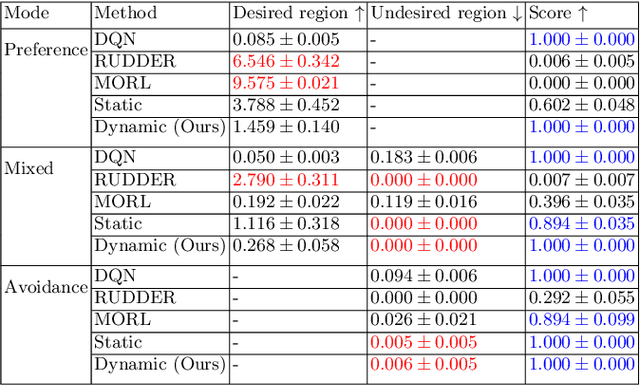
Deep reinforcement learning (RL) policies, although optimal in terms of task rewards, may not align with the personal preferences of human users. To ensure this alignment, a naive solution would be to retrain the agent using a reward function that encodes the user's specific preferences. However, such a reward function is typically not readily available, and as such, retraining the agent from scratch can be prohibitively expensive. We propose a more practical approach - to adapt the already trained policy to user-specific needs with the help of human feedback. To this end, we infer the user's intent through trajectory-level feedback and combine it with the trained task policy via a theoretically grounded dynamic policy fusion approach. As our approach collects human feedback on the very same trajectories used to learn the task policy, it does not require any additional interactions with the environment, making it a zero-shot approach. We empirically demonstrate in a number of environments that our proposed dynamic policy fusion approach consistently achieves the intended task while simultaneously adhering to user-specific needs.