 Add to Chrome
 Add to Firefox
 Add to Edge
Rethinking Satellite Image Restoration for Onboard AI: A Lightweight Learning-Based Approach
Apr 14, 2026
Satellite image restoration aims to improve image quality by compensating for degradations (e.g., noise and blur) introduced by the imaging system and acquisition conditions. As a fundamental preprocessing step, restoration directly impacts both ground-based product generation and emerging onboard AI applications. Traditional restoration pipelines based on sequential physical models are computationally intensive and slow, making them unsuitable for onboard environments. In this paper, we introduce ConvBEERS: a Convolutional Board-ready Embedded and Efficient Restoration model for Space to investigate whether a light and non-generative residual convolutional network, trained on simulated satellite data, can match or surpass a traditional ground-processing restoration pipeline across multiple operating conditions. Experiments conducted on simulated datasets and real Pleiades-HR imagery demonstrate that the proposed approach achieves competitive image quality, with a +6.9dB PSNR improvement. Evaluation on a downstream object detection task demonstrates that restoration significantly improves performance, with up to +5.1% mAP@50. In addition, successful deployment on a Xilinx Versal VCK190 FPGA validates its practical feasibility for satellite onboard processing, with a ~41x reduction in latency compared to the traditional pipeline. These results demonstrate the relevance of using lightweight CNNs to achieve competitive restoration quality while addressing real-world constraints in spaceborne systems.

Explaining raw data complexity to improve satellite onboard processing
Oct 08, 2025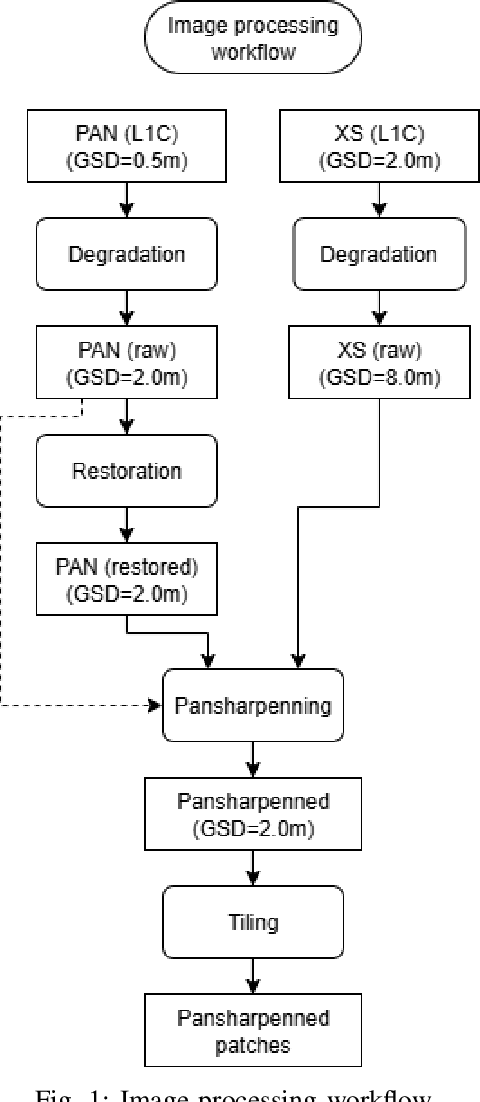
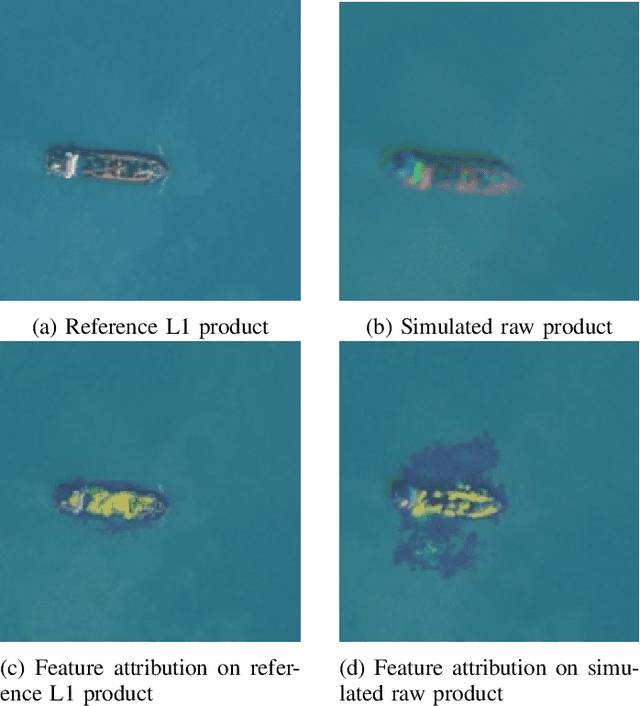
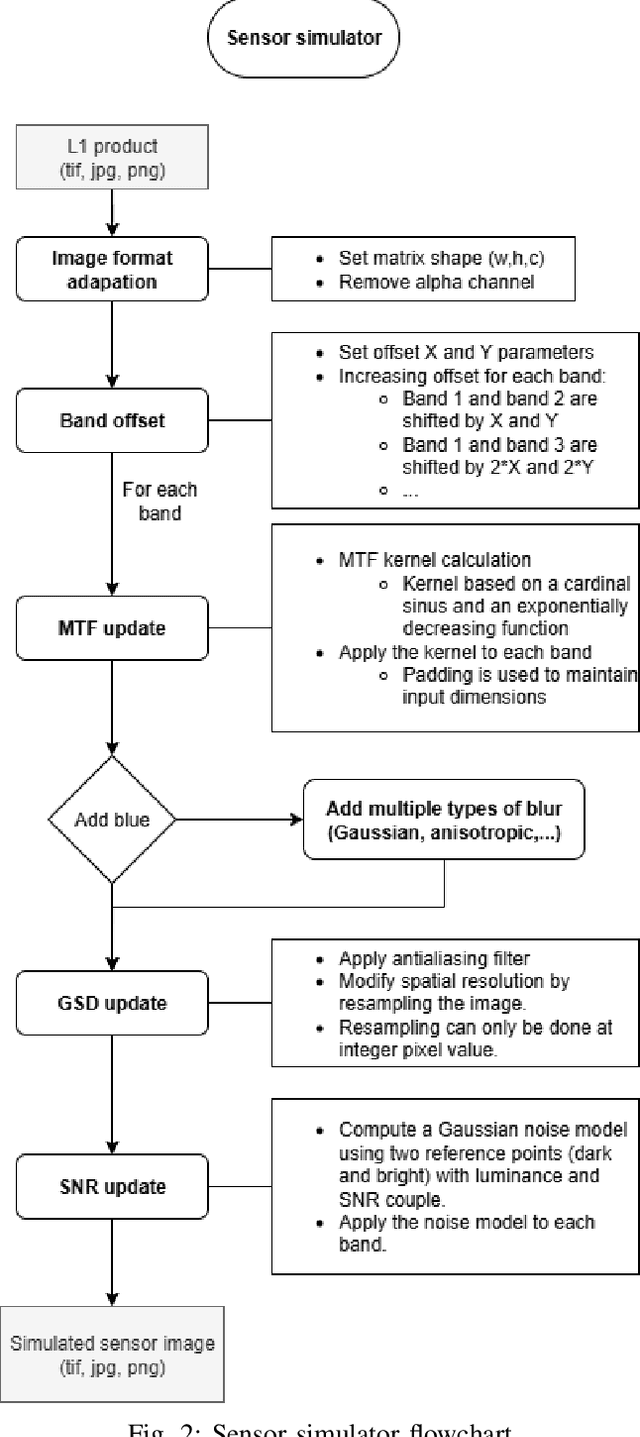
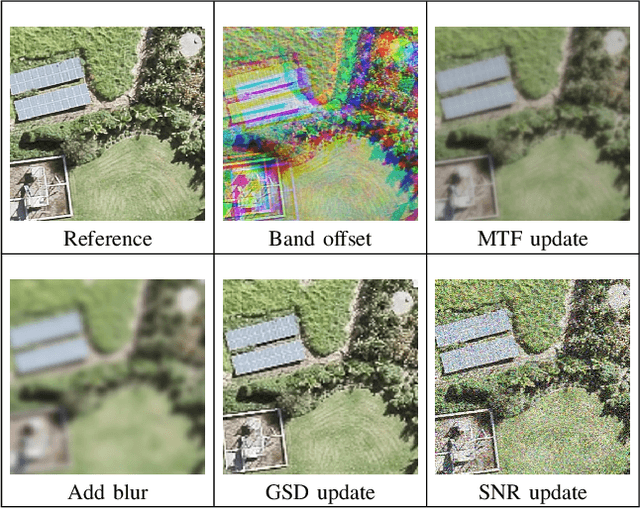
With increasing processing power, deploying AI models for remote sensing directly onboard satellites is becoming feasible. However, new constraints arise, mainly when using raw, unprocessed sensor data instead of preprocessed ground-based products. While current solutions primarily rely on preprocessed sensor images, few approaches directly leverage raw data. This study investigates the effects of utilising raw data on deep learning models for object detection and classification tasks. We introduce a simulation workflow to generate raw-like products from high-resolution L1 imagery, enabling systemic evaluation. Two object detection models (YOLOv11s and YOLOX-S) are trained on both raw and L1 datasets, and their performance is compared using standard detection metrics and explainability tools. Results indicate that while both models perform similarly at low to medium confidence thresholds, the model trained on raw data struggles with object boundary identification at high confidence levels. It suggests that adapting AI architectures with improved contouring methods can enhance object detection on raw images, improving onboard AI for remote sensing.