 Add to Chrome
 Add to Firefox
 Add to Edge
SMCNet: Supervised Surface Material Classification Using mmWave Radar IQ Signals and Complex-valued CNNs
Apr 08, 2026
Understanding surface material properties is crucial for enhancing indoor robot perception and indoor digital twinning. However, not all sensor modalities typically employed for this task are capable of reliably capturing detailed surface material characteristics. By analyzing the reflected RF signal from a mmWave radar sensor, it is possible to extract information about the reflective material and its composition from a certain surface. We introduce a mmWave MIMO FMCW radar-based surface material classifier SMCNet, employing a complex-valued Convolutional Neural Network (CNN) and complex radar IQ signal input for classifying indoor surface materials. While current radar-based material estimation approaches rely on a fixed sensing distance and constrained setups, our approach incorporates a setup with multiple sensing distances. We trained SMCNet using data from three distinct distances and subsequently tested it on these distances, as well as on two more unseen distances. We reached an overall accuracy of 99.12-99.53 % on our test set. Notably, range FFT pre-processing improved accuracy on unknown distances from 25.25 % to 58.81 % without re-training.

ACCOR: Attention-Enhanced Complex-Valued Contrastive Learning for Occluded Object Classification Using mmWave Radar IQ Signals
Dec 12, 2025
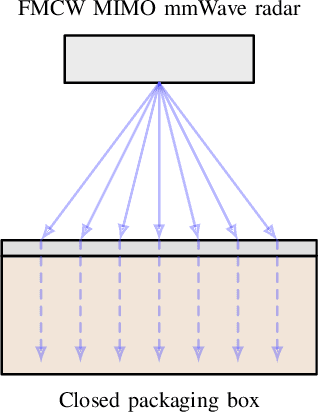
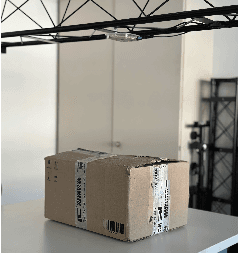

Millimeter-wave (mmWave) radar has emerged as a robust sensing modality for several areas, offering reliable operation under adverse environmental conditions. Its ability to penetrate lightweight materials such as packaging or thin walls enables non-visual sensing in industrial and automated environments and can provide robotic platforms with enhanced environmental perception when used alongside optical sensors. Recent work with MIMO mmWave radar has demonstrated its ability to penetrate cardboard packaging for occluded object classification. However, existing models leave room for improvement and warrant a more thorough evaluation across different sensing frequencies. In this paper, we propose ACCOR, an attention-enhanced complex-valued contrastive learning approach for radar, enabling robust occluded object classification. We process complex-valued IQ radar signals using a complex-valued CNN backbone, followed by a multi-head attention layer and a hybrid loss. Our proposed loss combines a weighted cross-entropy term with a supervised contrastive term. We further extend an existing 64 GHz dataset with a 67 GHz subset of the occluded objects and evaluate our model using both center frequencies. Performance evaluation demonstrates that our approach outperforms prior radar-specific models and image classification models with adapted input, achieving classification accuracies of 96.60% at 64 GHz and 93.59% at 67 GHz for ten different objects. These results demonstrate the benefits of complex-valued deep learning with attention and contrastive learning for mmWave radar-based occluded object classification in industrial and automated environments.
RadarFuseNet: Complex-Valued Attention-Based Fusion of IQ Time- and Frequency-Domain Radar Features for Classification Tasks
Dec 12, 2025Millimeter-wave (mmWave) radar has emerged as a compact and powerful sensing modality for advanced perception tasks that leverage machine learning techniques. It is particularly effective in scenarios where vision-based sensors fail to capture reliable information, such as detecting occluded objects or distinguishing between different surface materials in indoor environments. Due to the non-linear characteristics of mmWave radar signals, deep learning-based methods are well suited for extracting relevant information from in-phase and quadrature (IQ) data. However, the current state of the art in IQ signal-based occluded-object and material classification still offers substantial potential for further improvement. In this paper, we propose a bidirectional cross-attention fusion network that combines IQ-signal and FFT-transformed radar features obtained by distinct complex-valued convolutional neural networks (CNNs). The proposed method achieves improved performance and robustness compared to standalone complex-valued CNNs. We achieve a near-perfect material classification accuracy of 99.92% on samples collected at same sensor-to-surface distances used during training, and an improved accuracy of 67.38% on samples measured at previously unseen distances, demonstrating improved generalization ability across varying measurement conditions. Furthermore, the accuracy for occluded object classification improves from 91.99% using standalone complex-valued CNNs to 94.20% using our proposed approach.