 Add to Chrome
 Add to Firefox
 Add to Edge
Artificial Intelligence for Sentiment Analysis of Persian Poetry
Mar 11, 2026
Recent advancements of the Artificial Intelligence (AI) have led to the development of large language models (LLMs) that are capable of understanding, analysing, and creating textual data. These language models open a significant opportunity in analyzing the literature and more specifically poetry. In the present work, we employ multiple Bidirectional encoder representations from transformers (BERT) and Generative Pre-trained Transformer (GPT) based language models to analyze the works of two prominent Persian poets: Jalal al-Din Muhammad Rumi (Rumi) and Parvin E'tesami. The main objective of this research is to investigate the capability of the modern language models in grasping complexities of the Persian poetry and explore potential correlations between the poems' sentiment and their meters. Our findings in this study indicates that GPT4o language model can reliably be used in analysis of Persian poetry. Furthermore, the results of our sentiment analysis revealed that in general, Rumi's poems express happier sentiments compared to Parvin E'tesami's poems. Furthermore, comparing the utilization of poetic meters highlighted Rumi's poems superiority in using meters to express a wider variety of sentiments. These findings are significant as they confirm that LLMs can be effectively applied in conducting computer-based semantic studies, where human interpretations are not required, and thereby significantly reducing potential biases in the analysis.

Opportunities for Persian Digital Humanities Research with Artificial Intelligence Language Models; Case Study: Forough Farrokhzad
May 10, 2024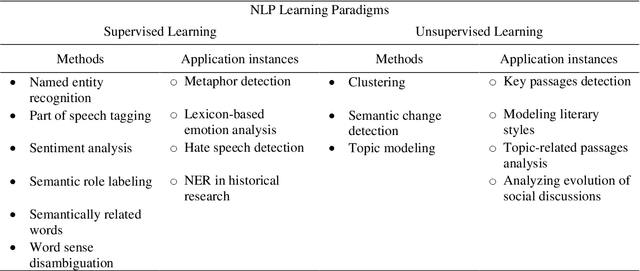
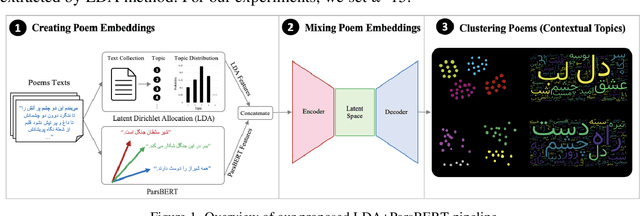
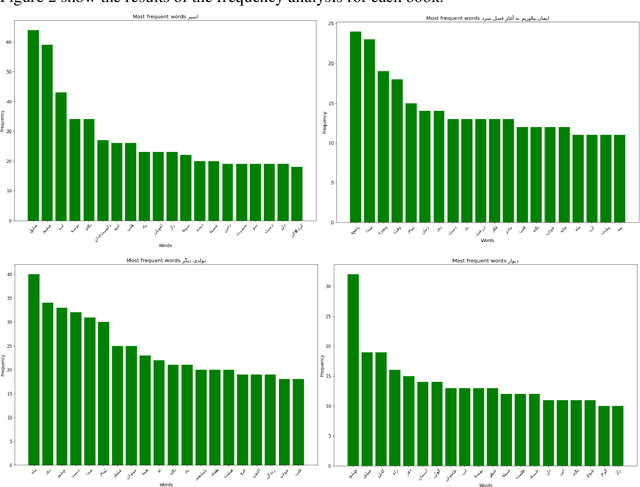
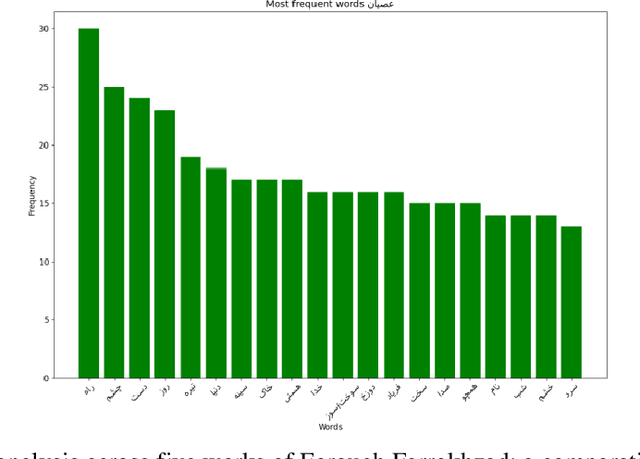
This study explores the integration of advanced Natural Language Processing (NLP) and Artificial Intelligence (AI) techniques to analyze and interpret Persian literature, focusing on the poetry of Forough Farrokhzad. Utilizing computational methods, we aim to unveil thematic, stylistic, and linguistic patterns in Persian poetry. Specifically, the study employs AI models including transformer-based language models for clustering of the poems in an unsupervised framework. This research underscores the potential of AI in enhancing our understanding of Persian literary heritage, with Forough Farrokhzad's work providing a comprehensive case study. This approach not only contributes to the field of Persian Digital Humanities but also sets a precedent for future research in Persian literary studies using computational techniques.