 Add to Chrome
 Add to Firefox
 Add to Edge
MedFormer-UR: Uncertainty-Routed Transformer for Medical Image Classification
Apr 10, 2026
To ensure safe clinical integration, deep learning models must provide more than just high accuracy; they require dependable uncertainty quantification. While current Medical Vision Transformers perform well, they frequently struggle with overconfident predictions and a lack of transparency, issues that are magnified by the noisy and imbalanced nature of clinical data. To address this, we enhanced the modified Medical Transformer (MedFormer) that incorporates prototype-based learning and uncertainty-guided routing, by utilizing a Dirichlet distribution for per-token evidential uncertainty, our framework can quantify and localize ambiguity in real-time. This uncertainty is not just an output but an active participant in the training process, filtering out unreliable feature updates. Furthermore, the use of class-specific prototypes ensures the embedding space remains structured, allowing for decisions based on visual similarity. Testing across four modalities (mammography, ultrasound, MRI, and histopathology) confirms that our approach significantly enhances model calibration, reducing expected calibration error (ECE) by up to 35%, and improves selective prediction, even when accuracy gains are modest.

An Autoencoder and Generative Adversarial Networks Approach for Multi-Omics Data Imbalanced Class Handling and Classification
May 16, 2024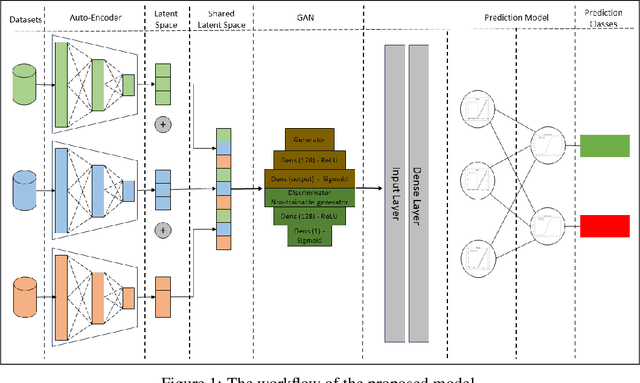


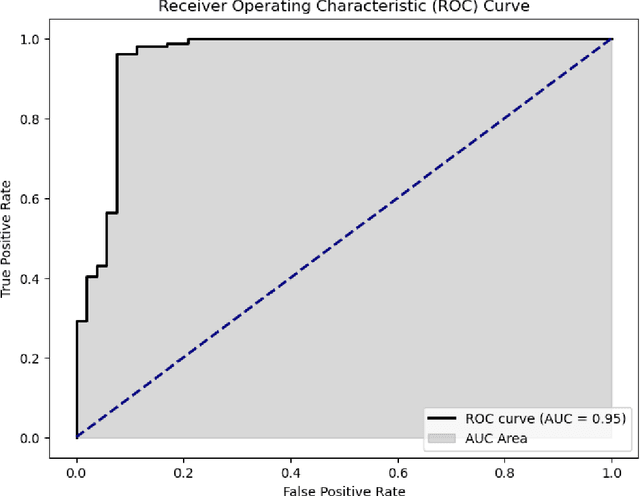
In the relentless efforts in enhancing medical diagnostics, the integration of state-of-the-art machine learning methodologies has emerged as a promising research area. In molecular biology, there has been an explosion of data generated from multi-omics sequencing. The advent sequencing equipment can provide large number of complicated measurements per one experiment. Therefore, traditional statistical methods face challenging tasks when dealing with such high dimensional data. However, most of the information contained in these datasets is redundant or unrelated and can be effectively reduced to significantly fewer variables without losing much information. Dimensionality reduction techniques are mathematical procedures that allow for this reduction; they have largely been developed through statistics and machine learning disciplines. The other challenge in medical datasets is having an imbalanced number of samples in the classes, which leads to biased results in machine learning models. This study, focused on tackling these challenges in a neural network that incorporates autoencoder to extract latent space of the features, and Generative Adversarial Networks (GAN) to generate synthetic samples. Latent space is the reduced dimensional space that captures the meaningful features of the original data. Our model starts with feature selection to select the discriminative features before feeding them to the neural network. Then, the model predicts the outcome of cancer for different datasets. The proposed model outperformed other existing models by scoring accuracy of 95.09% for bladder cancer dataset and 88.82% for the breast cancer dataset.