 Add to Chrome
 Add to Firefox
 Add to Edge
Role of AI Innovation, Clean Energy and Digital Economy towards Net Zero Emission in the United States: An ARDL Approach
Mar 24, 2025
The current paper investigates the influences of AI innovation, GDP growth, renewable energy utilization, the digital economy, and industrialization on CO2 emissions in the USA from 1990 to 2022, incorporating the ARDL methodology. The outcomes observe that AI innovation, renewable energy usage, and the digital economy reduce CO2 emissions, while GDP expansion and industrialization intensify ecosystem damage. Unit root tests (ADF, PP, and DF-GLS) reveal heterogeneous integration levels amongst components, ensuring robustness in the ARDL analysis. Complementary methods (FMOLS, DOLS, and CCR) validate the results, enhancing their reliability. Pairwise Granger causality assessments identify strong unidirectional connections within CO2 emissions and AI innovation, as well as the digital economy, underscoring their significant roles in ecological sustainability. This research highlights the requirement for strategic actions to nurture equitable growth, including advancements in AI technology, green energy adoption, and environmentally conscious industrial development, to improve environmental quality in the United States.
* 24 pages, 8 tables, 1 figure

Insight about Detection, Prediction and Weather Impact of Coronavirus (Covid-19) using Neural Network
Apr 05, 2021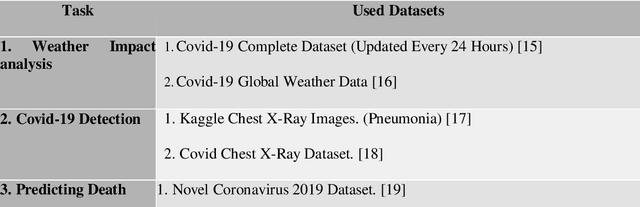
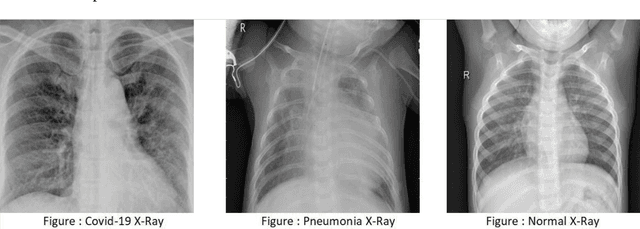
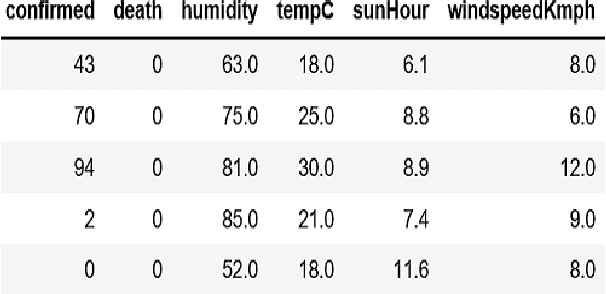

The world is facing a tough situation due to the catastrophic pandemic caused by novel coronavirus (COVID-19). The number people affected by this virus are increasing exponentially day by day and the number has already crossed 6.4 million. As no vaccine has been discovered yet, the early detection of patients and isolation is the only and most effective way to reduce the spread of the virus. Detecting infected persons from chest X-Ray by using Deep Neural Networks, can be applied as a time and laborsaving solution. In this study, we tried to detect Covid-19 by classification of Covid-19, pneumonia and normal chest X-Rays. We used five different Convolutional Pre-Trained Neural Network models (VGG16, VGG19, Xception, InceptionV3 and Resnet50) and compared their performance. VGG16 and VGG19 shows precise performance in classification. Both models can classify between three kinds of X-Rays with an accuracy over 92%. Another part of our study was to find the impact of weather factors (temperature, humidity, sun hour and wind speed) on this pandemic using Decision Tree Regressor. We found that temperature, humidity and sun-hour jointly hold 85.88% impact on escalation of Covid-19 and 91.89% impact on death due to Covid-19 where humidity has 8.09% impact on death. We also tried to predict the death of an individual based on age, gender, country, and location due to COVID-19 using the LogisticRegression, which can predict death of an individual with a model accuracy of 94.40%.
* 15 Pages, 13 Figures and 4 Tables