 Add to Chrome
 Add to Firefox
 Add to Edge
Learning-Based Phase Estimation for Multi-Frequency Carrier Phase Ranging under Structured Multipath Conditions
Jun 09, 2026
Carrier-phase (CP) ranging is a key enabler of high-precision positioning in modern wireless systems. In multi-frequency OFDM-based sensing, phase observations across subcarriers provide information about the underlying propagation geometry. However, in realistic industrial and urban environments, these observations exhibit non-Gaussian and asymmetric characteristics due to deterministic multipath components, violating standard circular statistical assumptions. In this work, we analyze CP-based ranging as an estimation problem over circular phase observations. We show that conventional model-based estimators, such as circular averaging under von Mises assumptions, become biased under 3GPP-compliant propagation conditions. Using a QuaDRiGa-based simulation framework, we evaluate empirical phase distributions in Industrial Factory (InF) and Urban Microcell (UMi) scenarios and quantify their deviation from classical statistical models. To address these limitations, we propose a learning-based estimator that operates directly on empirical phase distributions without assuming a predefined statistical model. Experimental results show improved accuracy compared to classical estimators, particularly under multipath conditions.

Sequence Alignment Algorithm for Statistical Similarity Assessment
Jun 07, 2021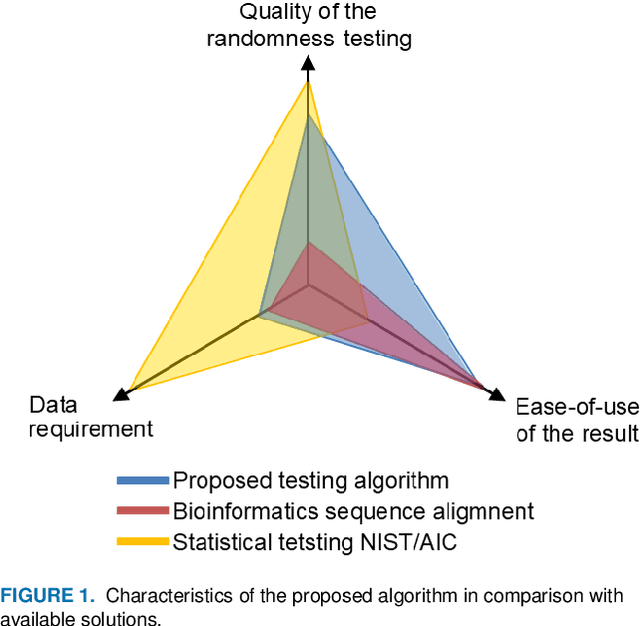
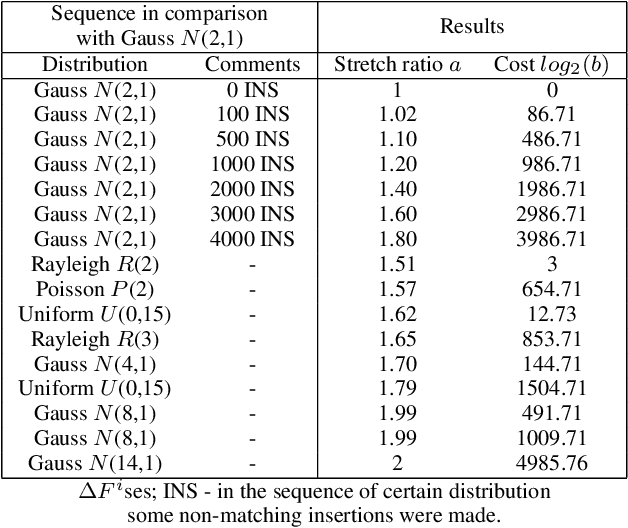
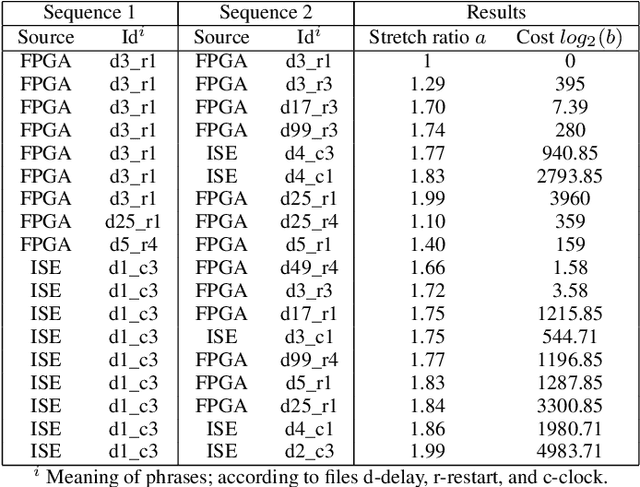
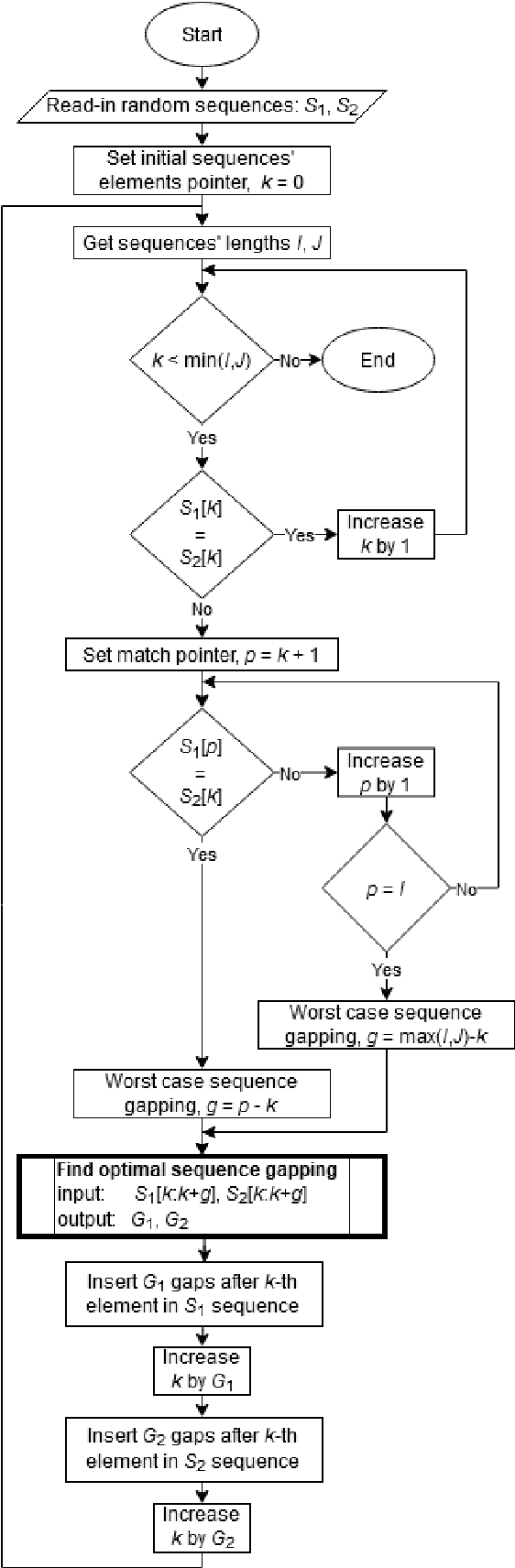
This paper presents a new approach to statistical similarity assessment based on sequence alignment. The algorithm performs mutual matching of two random sequences by successively searching for common elements and by applying sequence breaks to matchless elements in the function of exponential cost. As a result, sequences varying significantly generate a high-cost alignment, while for low-cost sequences the introduced interruptions allow inferring the nature of sequences dependence. The most important advantage of the algorithm is an easy interpretation of the obtained results based on two parameters: stretch ratio and stretch cost. The operation of the method has been simulation tested and verified with the use of real data obtained from hardware random number generators. The proposed solution ensures simple implementation enabling the integration of hardware solutions, and operation based on only two sequences of any length predisposes the method to online testing.