 Add to Chrome
 Add to Firefox
 Add to Edge
Deep-learning estimation of band gap with the reading-periodic-table method and periodic convolution layer
Paper and Code

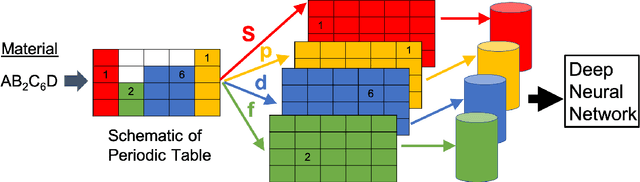
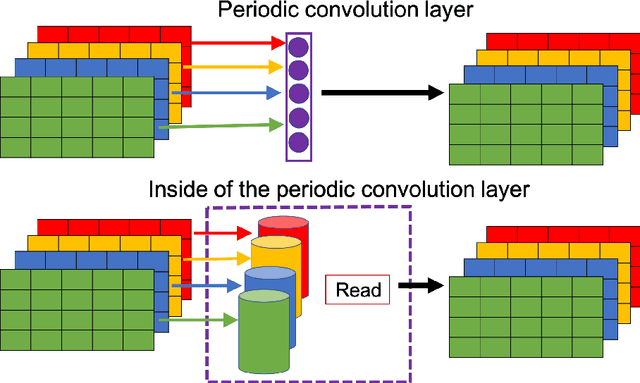
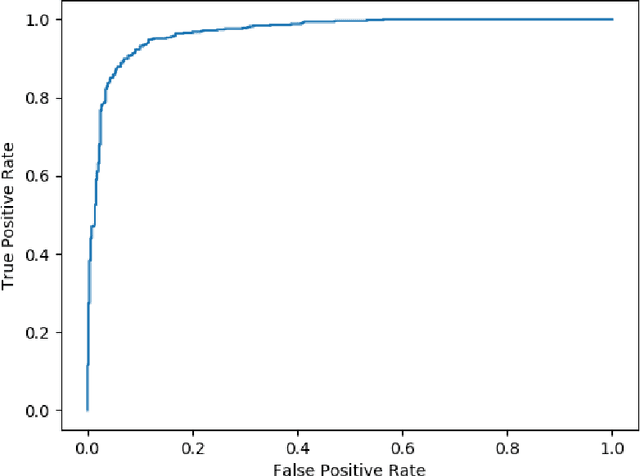

In this study, the deep learning method named reading periodic table, which utilizes deep learning to read the periodic table and the laws of the elements, was extended. The method now also learns the periodicity behind the periodic table, that is, the left- and right-most columns are adjacent to one another behind the table with one row shifted at the learning representation level. While the original method handles the table as it is, the extended method treats the periodic table as if its two edges are connected. This is achieved using novel layers named periodic convolution layers, which can handle inputs having periodicity and may be applied to other problems related to computer vision, time series, and so on if the data possesses some periodicity. In the reading periodic table method, no input of any material feature or descriptor is required. We verified that the method is also applicable for estimating the band gap of materials other than superconductors, for which the method was originally applied. We demonstrated two types of deep learning estimation: methods to estimate the existence of a band gap and those to estimate the value of the band gap given that the materials were known to have one. Finally, we discuss the limitations of the dataset and model evaluation method. We may be unable to distinguish good models based on the random train--test split scheme; thus, we must prepare an appropriate dataset where the training and test data are temporally separate.
