Get our free extension to see links to code for papers anywhere online!Free add-on: code for papers everywhere!Free add-on: See code for papers anywhere!
 Add to Chrome
 Add to Firefox
 Add to Edge
Combining Knowledge Sources to Reorder N-Best Speech Hypothesis Lists
Paper and Code
Jul 12, 1994


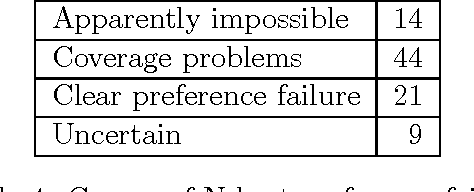
A simple and general method is described that can combine different knowledge sources to reorder N-best lists of hypotheses produced by a speech recognizer. The method is automatically trainable, acquiring information from both positive and negative examples. Experiments are described in which it was tested on a 1000-utterance sample of unseen ATIS data.
* 13 pages, Latex source. To appear in Proc. HLT '94
View paper on