 Add to Chrome
 Add to Firefox
 Add to Edge
LibOPT: An Open-Source Platform for Fast Prototyping Soft Optimization Techniques
Apr 18, 2017
Optimization techniques play an important role in several scientific and real-world applications, thus becoming of great interest for the community. As a consequence, a number of open-source libraries are available in the literature, which ends up fostering the research and development of new techniques and applications. In this work, we present a new library for the implementation and fast prototyping of nature-inspired techniques called LibOPT. Currently, the library implements 15 techniques and 112 benchmarking functions, as well as it also supports 11 hypercomplex-based optimization approaches, which makes it one of the first of its kind. We showed how one can easily use and also implement new techniques in LibOPT under the C paradigm. Examples are provided with samples of source-code using benchmarking functions.

A Discrete Firefly Algorithm to Solve a Rich Vehicle Routing Problem Modelling a Newspaper Distribution System with Recycling Policy
Apr 14, 2016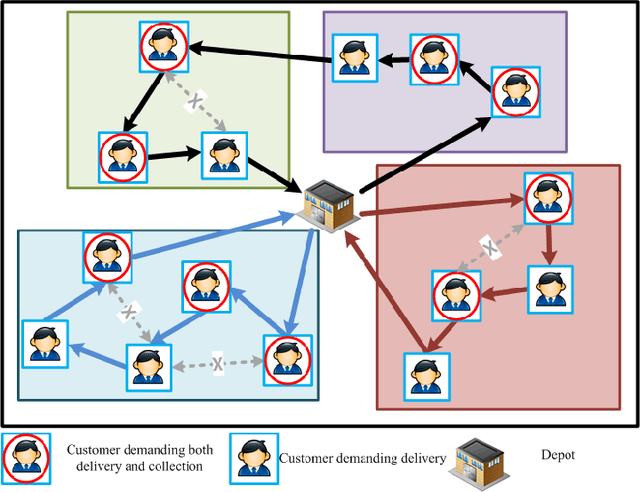
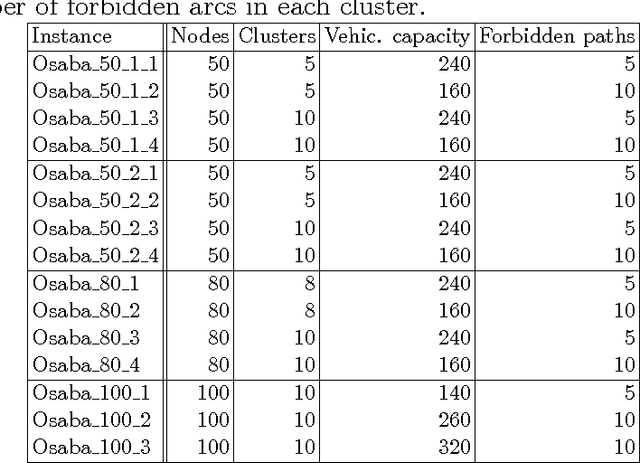
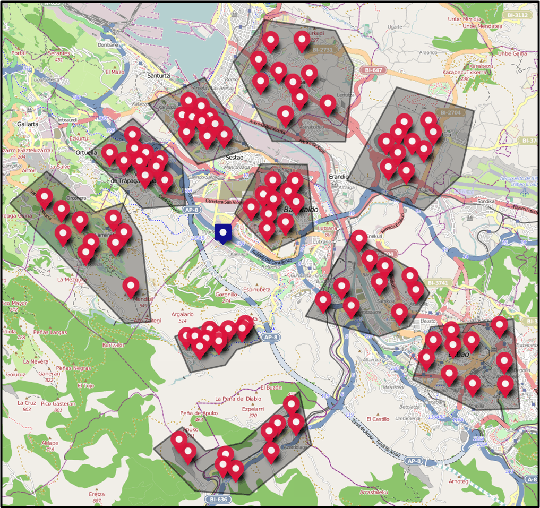
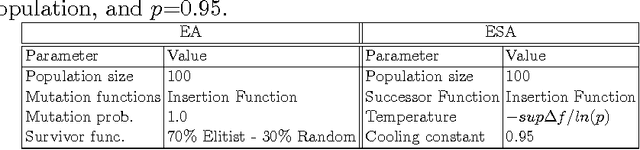
A real-world newspaper distribution problem with recycling policy is tackled in this work. In order to meet all the complex restrictions contained in such a problem, it has been modeled as a rich vehicle routing problem, which can be more specifically considered as an asymmetric and clustered vehicle routing problem with simultaneous pickup and deliveries, variable costs and forbidden paths (AC-VRP-SPDVCFP). This is the first study of such a problem in the literature. For this reason, a benchmark composed by 15 instances has been also proposed. In the design of this benchmark, real geographical positions have been used, located in the province of Bizkaia, Spain. For the proper treatment of this AC-VRP-SPDVCFP, a discrete firefly algorithm (DFA) has been developed. This application is the first application of the firefly algorithm to any rich vehicle routing problem. To prove that the proposed DFA is a promising technique, its performance has been compared with two other well-known techniques: an evolutionary algorithm and an evolutionary simulated annealing. Our results have shown that the DFA has outperformed these two classic meta-heuristics.
An Improved Discrete Bat Algorithm for Symmetric and Asymmetric Traveling Salesman Problems
Apr 14, 2016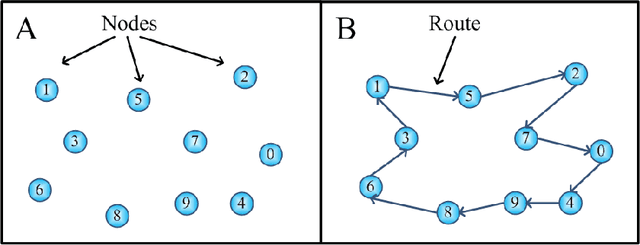

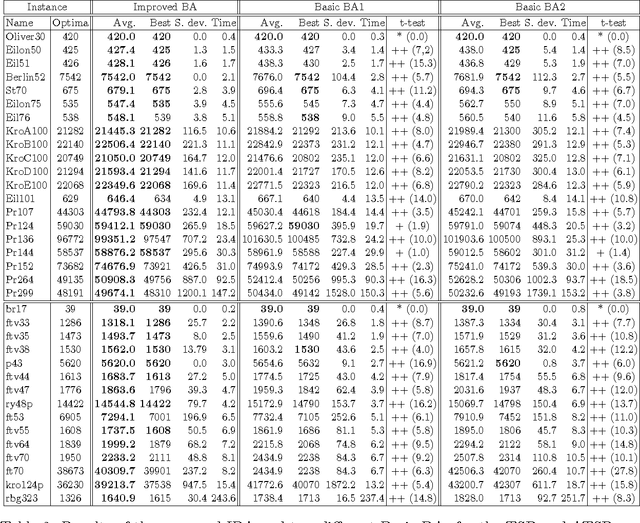
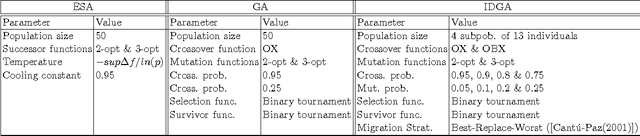
Bat algorithm is a population metaheuristic proposed in 2010 which is based on the echolocation or bio-sonar characteristics of microbats. Since its first implementation, the bat algorithm has been used in a wide range of fields. In this paper, we present a discrete version of the bat algorithm to solve the well-known symmetric and asymmetric traveling salesman problems. In addition, we propose an improvement in the basic structure of the classic bat algorithm. To prove that our proposal is a promising approximation method, we have compared its performance in 37 instances with the results obtained by five different techniques: evolutionary simulated annealing, genetic algorithm, an island based distributed genetic algorithm, a discrete firefly algorithm and an imperialist competitive algorithm. In order to obtain fair and rigorous comparisons, we have conducted three different statistical tests along the paper: the Student's $t$-test, the Holm's test, and the Friedman test. We have also compared the convergence behaviour shown by our proposal with the ones shown by the evolutionary simulated annealing, and the discrete firefly algorithm. The experimentation carried out in this study has shown that the presented improved bat algorithm outperforms significantly all the other alternatives in most of the cases.
* 1 figure, 8 tables
Random-Key Cuckoo Search for the Travelling Salesman Problem
Apr 14, 2016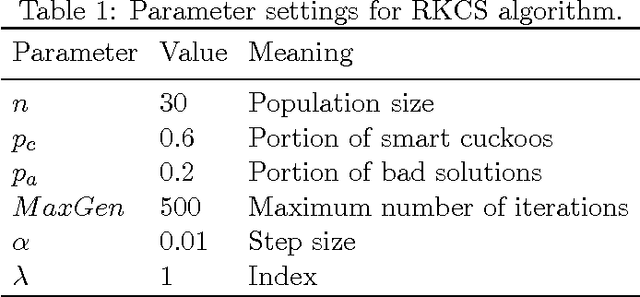
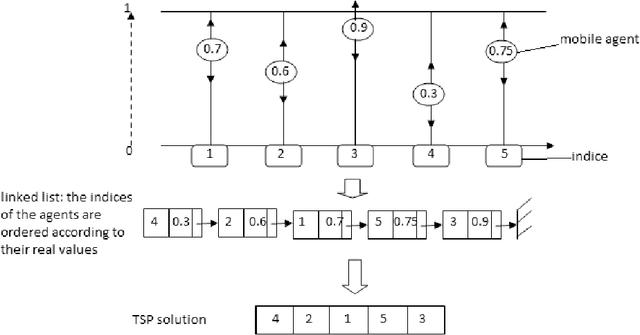
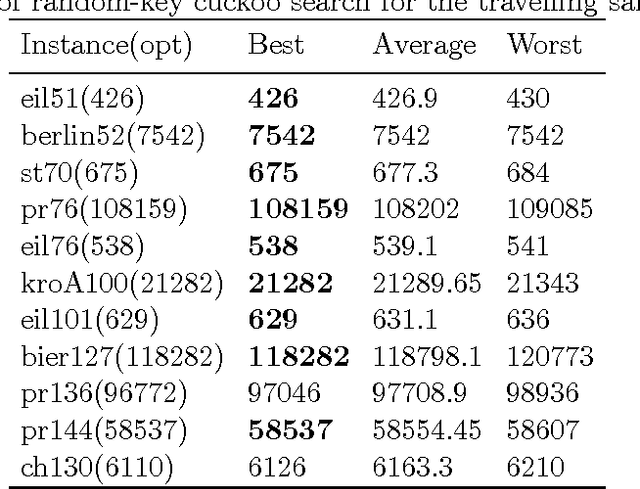
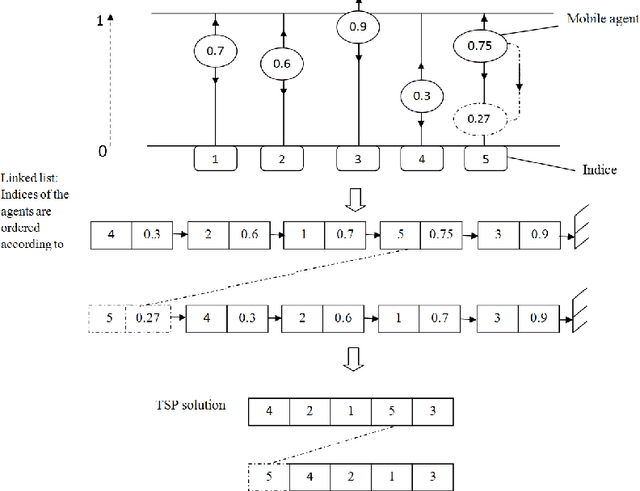
Combinatorial optimization problems are typically NP-hard, and thus very challenging to solve. In this paper, we present the random key cuckoo search (RKCS) algorithm for solving the famous Travelling Salesman Problem (TSP). We used a simplified random-key encoding scheme to pass from a continuous space (real numbers) to a combinatorial space. We also consider the displacement of a solution in both spaces using Levy flights. The performance of the proposed RKCS is tested against a set of benchmarks of symmetric TSP from the well-known TSPLIB library. The results of the tests show that RKCS is superior to some other metaheuristic algorithms.
* 13 pages, 6 figures
Bat Algorithm is Better Than Intermittent Search Strategy
Aug 22, 2014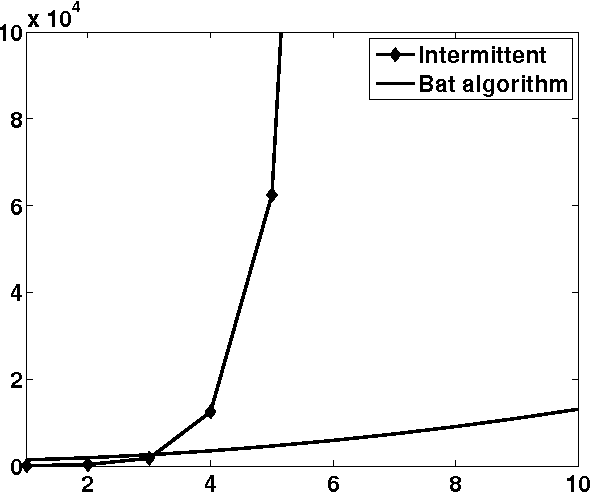
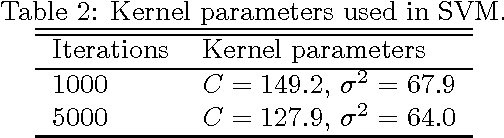
The efficiency of any metaheuristic algorithm largely depends on the way of balancing local intensive exploitation and global diverse exploration. Studies show that bat algorithm can provide a good balance between these two key components with superior efficiency. In this paper, we first review some commonly used metaheuristic algorithms, and then compare the performance of bat algorithm with the so-called intermittent search strategy. From simulations, we found that bat algorithm is better than the optimal intermittent search strategy. We also analyse the comparison results and their implications for higher dimensional optimization problems. In addition, we also apply bat algorithm in solving business optimization and engineering design problems.
Flower Pollination Algorithm: A Novel Approach for Multiobjective Optimization
Aug 22, 2014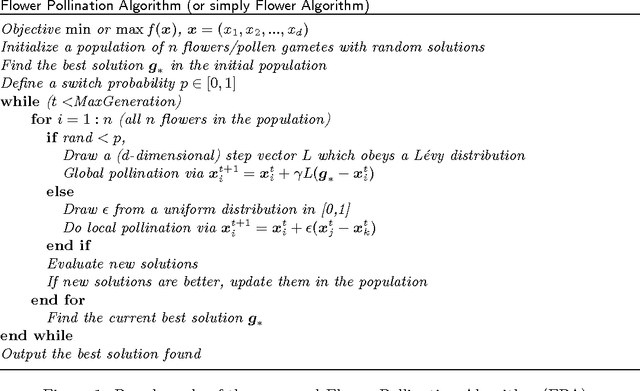
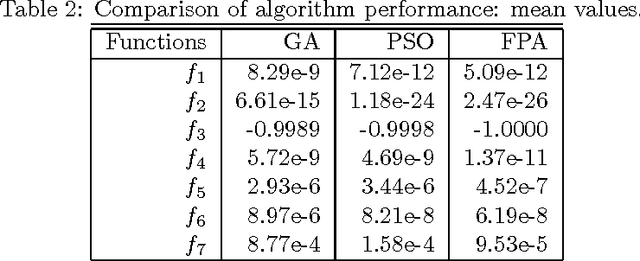
Multiobjective design optimization problems require multiobjective optimization techniques to solve, and it is often very challenging to obtain high-quality Pareto fronts accurately. In this paper, the recently developed flower pollination algorithm (FPA) is extended to solve multiobjective optimization problems. The proposed method is used to solve a set of multobjective test functions and two bi-objective design benchmarks, and a comparison of the proposed algorithm with other algorithms has been made, which shows that FPA is efficient with a good convergence rate. Finally, the importance for further parametric studies and theoretical analysis are highlighted and discussed.
* 17 pages 8 figures. arXiv admin note: substantial text overlap with arXiv:1404.0695
Applications and Analysis of Bio-Inspired Eagle Strategy for Engineering Optimization
Aug 22, 2014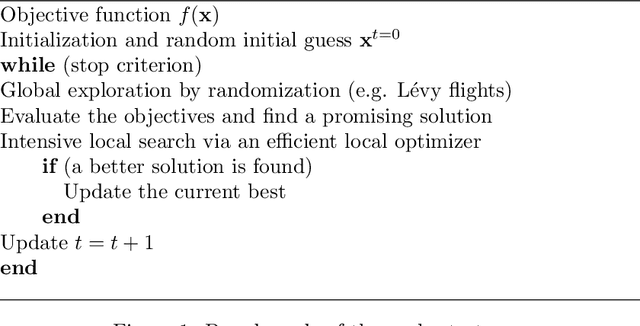
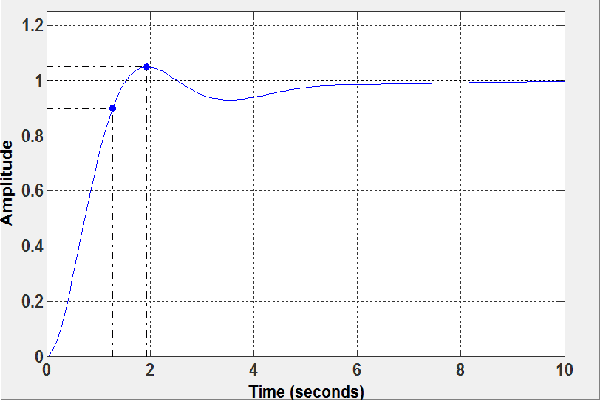
All swarm-intelligence-based optimization algorithms use some stochastic components to increase the diversity of solutions during the search process. Such randomization is often represented in terms of random walks. However, it is not yet clear why some randomization techniques (and thus why some algorithms) may perform better than others for a given set of problems. In this work, we analyze these randomization methods in the context of nature-inspired algorithms. We also use eagle strategy to provide basic observations and relate step sizes and search efficiency using Markov theory. Then, we apply our analysis and observations to solve four design benchmarks, including the designs of a pressure vessel, a speed reducer, a PID controller and a heat exchanger. Our results demonstrate that eagle strategy with L\'evy flights can perform extremely well in reducing the overall computational efforts.
* 14 pages 1 figure
Cuckoo Search: Recent Advances and Applications
Aug 22, 2014Cuckoo search (CS) is a relatively new algorithm, developed by Yang and Deb in 2009, and CS is efficient in solving global optimization problems. In this paper, we review the fundamental ideas of cuckoo search and the latest developments as well as its applications. We analyze the algorithm and gain insight into its search mechanisms and find out why it is efficient. We also discuss the essence of algorithms and its link to self-organizing systems, and finally we propose some important topics for further research.
* 9 pages
Computational Optimization, Modelling and Simulation: Recent Trends and Challenges
Apr 02, 2014Modelling, simulation and optimization form an integrated part of modern design practice in engineering and industry. Tremendous progress has been observed for all three components over the last few decades. However, many challenging issues remain unresolved, and the current trends tend to use nature-inspired algorithms and surrogate-based techniques for modelling and optimization. This 4th workshop on Computational Optimization, Modelling and Simulation (COMS 2013) at ICCS 2013 will further summarize the latest developments of optimization and modelling and their applications in science, engineering and industry. In this review paper, we will analyse the recent trends in modelling and optimization, and their associated challenges. We will discuss important topics for further research, including parameter-tuning, large-scale problems, and the gaps between theory and applications.
Multi-objective Flower Algorithm for Optimization
Apr 02, 2014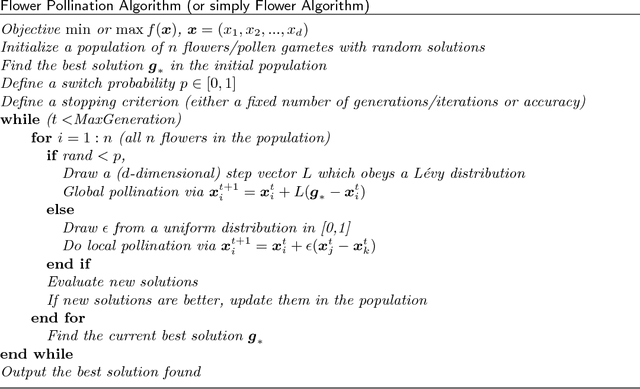
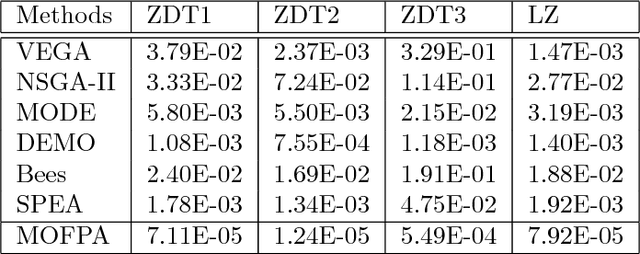
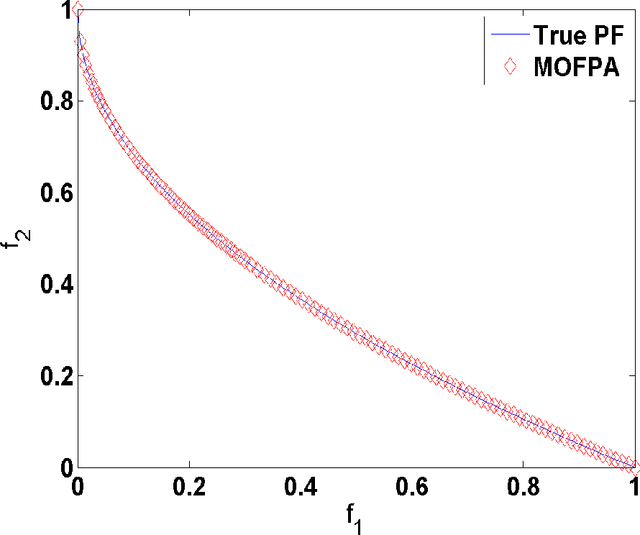
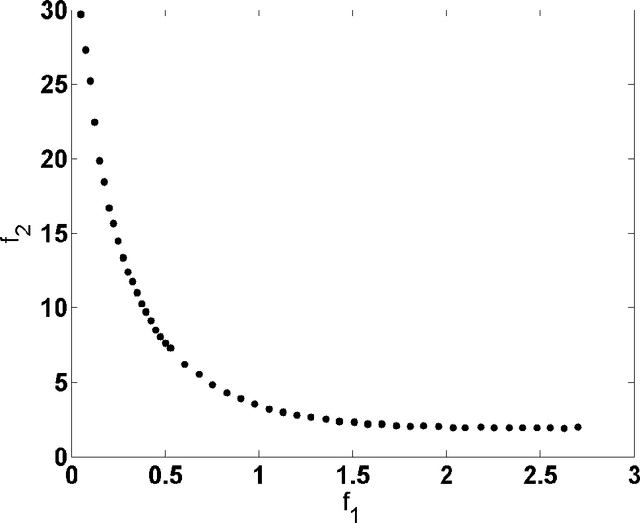
Flower pollination algorithm is a new nature-inspired algorithm, based on the characteristics of flowering plants. In this paper, we extend this flower algorithm to solve multi-objective optimization problems in engineering. By using the weighted sum method with random weights, we show that the proposed multi-objective flower algorithm can accurately find the Pareto fronts for a set of test functions. We then solve a bi-objective disc brake design problem, which indeed converges quickly.
* 2 figures. arXiv admin note: substantial text overlap with arXiv:1312.5673