 Add to Chrome
 Add to Firefox
 Add to Edge
Sensitivity analysis, multilinearity and beyond
Jul 04, 2016
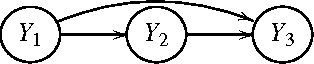
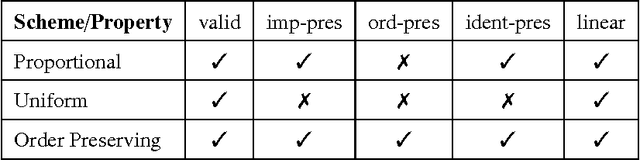
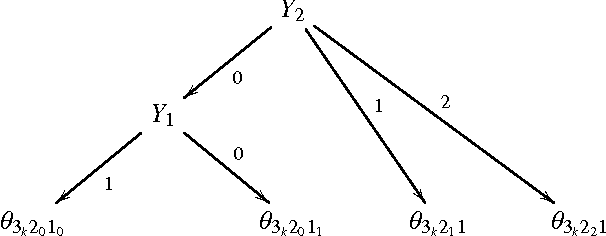

Sensitivity methods for the analysis of the outputs of discrete Bayesian networks have been extensively studied and implemented in different software packages. These methods usually focus on the study of sensitivity functions and on the impact of a parameter change to the Chan-Darwiche distance. Although not fully recognized, the majority of these results heavily rely on the multilinear structure of atomic probabilities in terms of the conditional probability parameters associated with this type of network. By defining a statistical model through the polynomial expression of its associated defining conditional probabilities, we develop a unifying approach to sensitivity methods applicable to a large suite of models including extensions of Bayesian networks, for instance context-specific and dynamic ones, and chain event graphs. By then focusing on models whose defining polynomial is multilinear, our algebraic approach enables us to prove that the Chan-Darwiche distance is minimized for a certain class of multi-parameter contemporaneous variations when parameters are proportionally covaried.

A Separation Theorem for Chain Event Graphs
Jan 21, 2015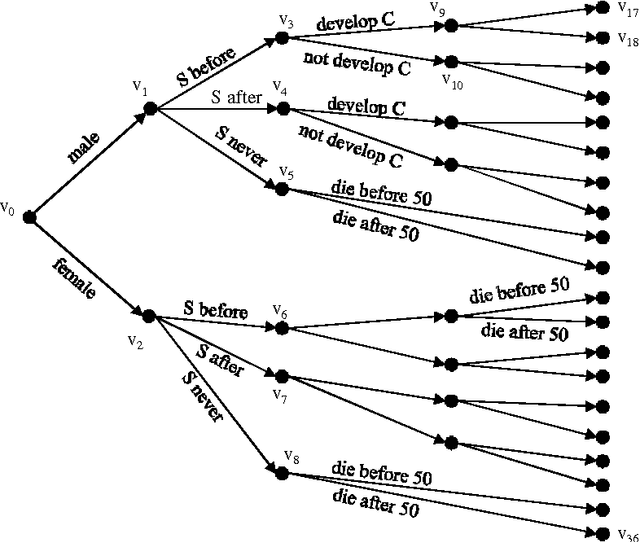
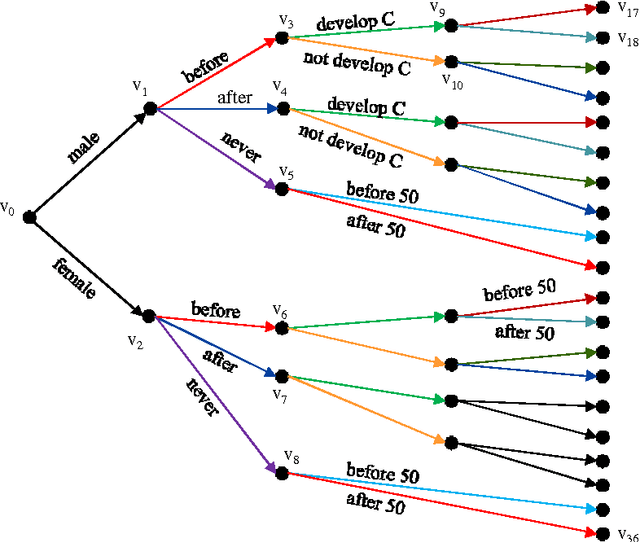
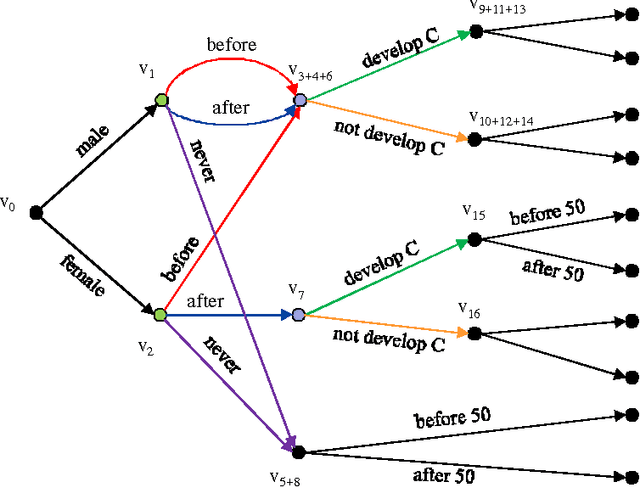
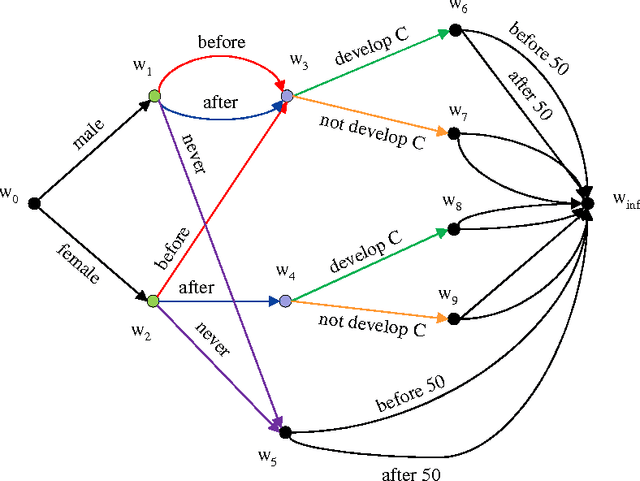
Bayesian Networks (BNs) are popular graphical models for the representation of statistical problems embodying dependence relationships between a number of variables. Much of this popularity is due to the d-separation theorem of Pearl and Lauritzen, which allows an analyst to identify the conditional independence statements that a model of the problem embodies using only the topology of the graph. However for many problems the complete model dependence structure cannot be depicted by a BN. The Chain Event Graph (CEG) was introduced for these types of problem. In this paper we introduce a separation theorem for CEGs, analogous to the d-separation theorem for BNs, which likewise allows an analyst to identify the conditional independence structure of their model from the topology of the graph.
Exact Estimation of Multiple Directed Acyclic Graphs
Nov 12, 2014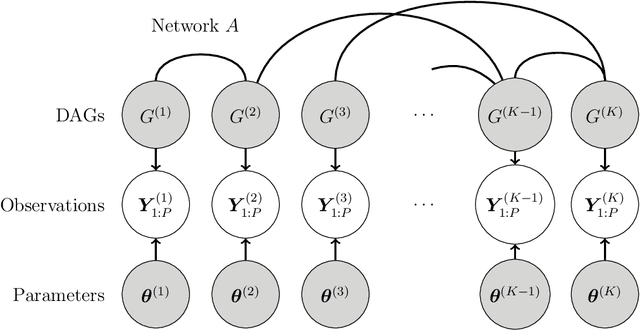
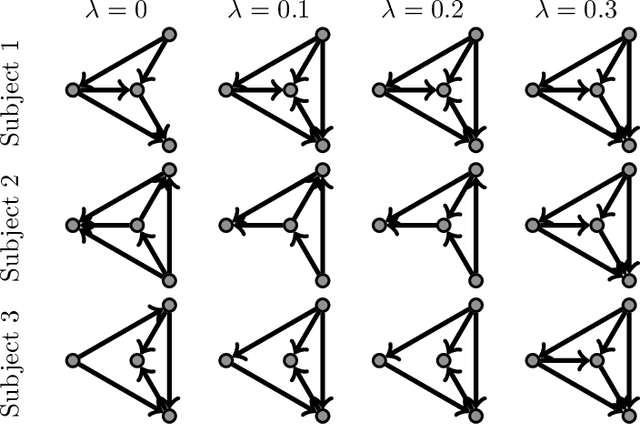

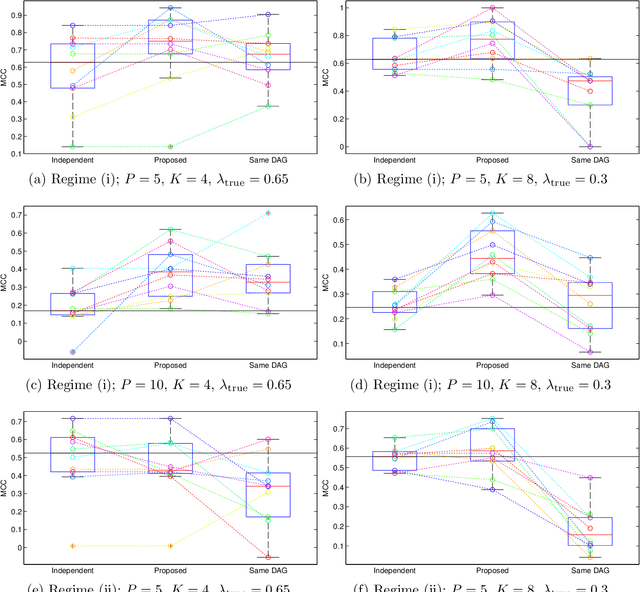
This paper considers the problem of estimating the structure of multiple related directed acyclic graph (DAG) models. Building on recent developments in exact estimation of DAGs using integer linear programming (ILP), we present an ILP approach for joint estimation over multiple DAGs, that does not require that the vertices in each DAG share a common ordering. Furthermore, we allow also for (potentially unknown) dependency structure between the DAGs. Results are presented on both simulated data and fMRI data obtained from multiple subjects.
On the Geometry of Bayesian Graphical Models with Hidden Variables
Jan 30, 2013

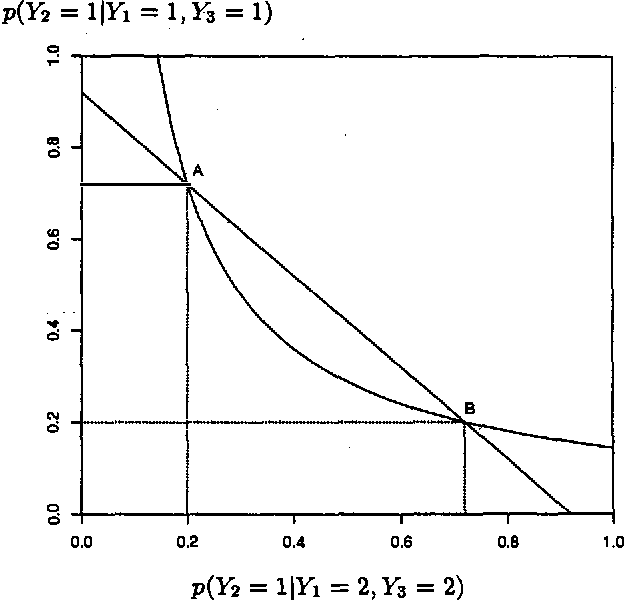
In this paper we investigate the geometry of the likelihood of the unknown parameters in a simple class of Bayesian directed graphs with hidden variables. This enables us, before any numerical algorithms are employed, to obtain certain insights in the nature of the unidentifiability inherent in such models, the way posterior densities will be sensitive to prior densities and the typical geometrical form these posterior densities might take. Many of these insights carry over into more complicated Bayesian networks with systematic missing data.
Approximate Learning in Complex Dynamic Bayesian Networks
Jan 23, 2013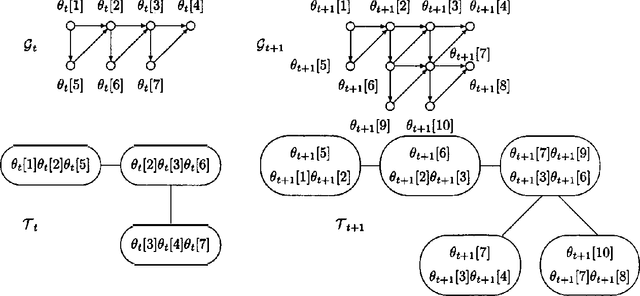
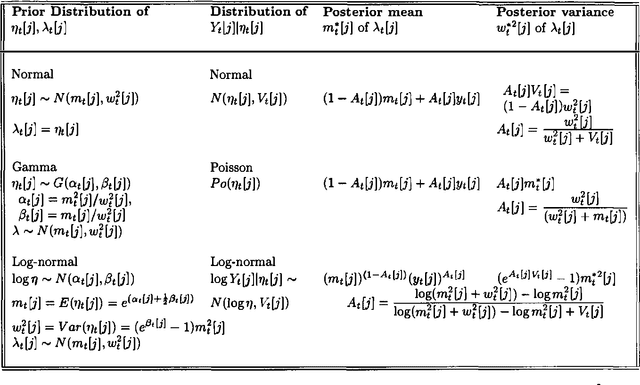
In this paper we extend the work of Smith and Papamichail (1999) and present fast approximate Bayesian algorithms for learning in complex scenarios where at any time frame, the relationships between explanatory state space variables can be described by a Bayesian network that evolve dynamically over time and the observations taken are not necessarily Gaussian. It uses recent developments in approximate Bayesian forecasting methods in combination with more familiar Gaussian propagation algorithms on junction trees. The procedure for learning state parameters from data is given explicitly for common sampling distributions and the methodology is illustrated through a real application. The efficiency of the dynamic approximation is explored by using the Hellinger divergence measure and theoretical bounds for the efficacy of such a procedure are discussed.
Propagation using Chain Event Graphs
Jun 13, 2012A Chain Event Graph (CEG) is a graphial model which designed to embody conditional independencies in problems whose state spaces are highly asymmetric and do not admit a natural product structure. In this paer we present a probability propagation algorithm which uses the topology of the CEG to build a transporter CEG. Intriungly,the transporter CEG is directly analogous to the triangulated Bayesian Network (BN) in the more conventional junction tree propagation algorithms used with BNs. The propagation method uses factorization formulae also analogous to (but different from) the ones using potentials on cliques and separators of the BN. It appears that the methods will be typically more efficient than the BN algorithms when applied to contexts where there is significant asymmetry present.
Bayesian MAP Model Selection of Chain Event Graphs
Apr 06, 2009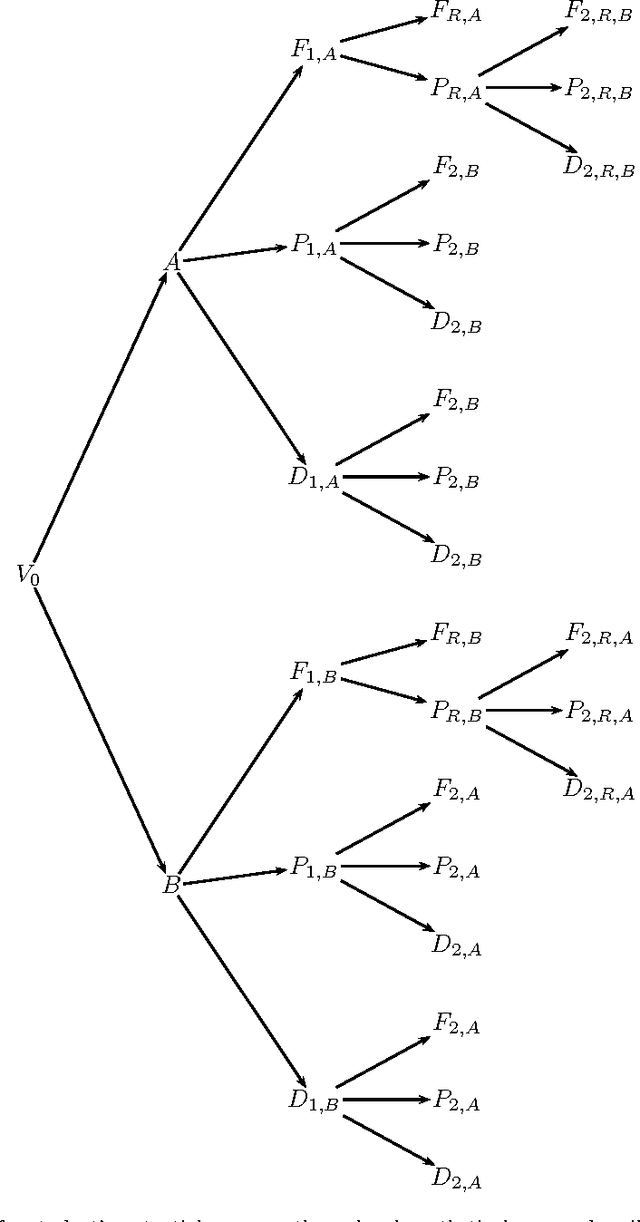
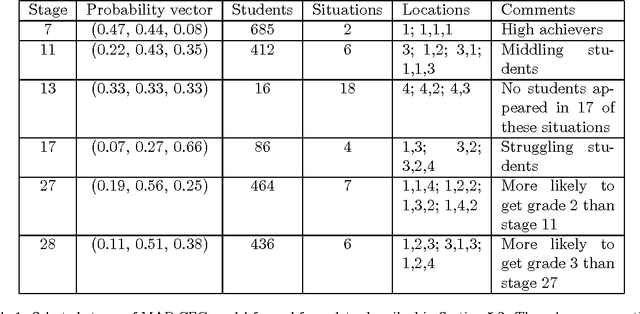
The class of chain event graph models is a generalisation of the class of discrete Bayesian networks, retaining most of the structural advantages of the Bayesian network for model interrogation, propagation and learning, while more naturally encoding asymmetric state spaces and the order in which events happen. In this paper we demonstrate how with complete sampling, conjugate closed form model selection based on product Dirichlet priors is possible, and prove that suitable homogeneity assumptions characterise the product Dirichlet prior on this class of models. We demonstrate our techniques using two educational examples.