 Add to Chrome
 Add to Firefox
 Add to Edge
Analysing drivers and interdependencies in European electricity markets using XAI
Jun 17, 2026
Electricity markets are inherently complex systems characterised by strong nonlinearities, high-dimensional interactions, and increasing interdependence across regions. While deep neural networks (DNNs) have demonstrated strong predictive capabilities for electricity prices, their lack of interpretability limits their usefulness for understanding the underlying drivers of price formation. This paper addresses this gap by combining DNN models with explainable artificial intelligence (XAI) techniques to analyse the determinants of electricity prices across 39 European bidding zones. We employ SHAP (SHapley Additive exPlanations) to quantify feature contributions and apply and extend SSHAP, an aggregation framework to improve interpretability in high-dimensional settings. The analysis identifies that renewable energy sources, particularly solar, play a disproportionately important role in price formation despite their lower share in total power generation. Gas prices remain a dominant and consistent driver across electricity markets, while interconnections significantly shape price dynamics, highlighting the strong interdependence of European electricity systems. In addition, a synthetic EU-wide electricity market is constructed to explore the counterfactual scenario of a fully integrated market with a single price.

Reinforcement Learning for Electricity Network Operation
Mar 16, 2020
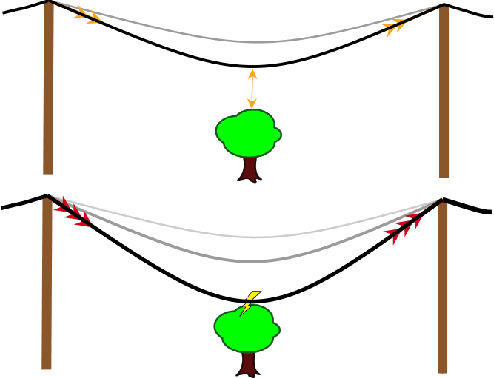
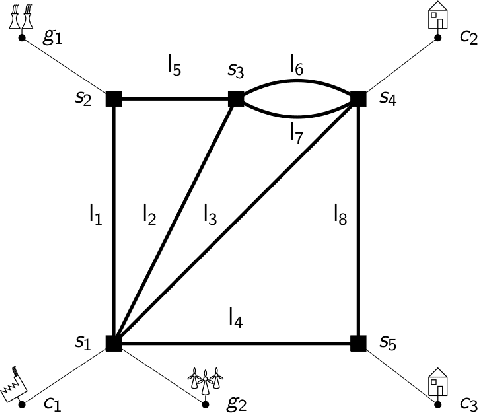
This paper presents the background material required for the Learning to Run Power Networks Challenge. The challenge is focused on using Reinforcement Learning to train an agent to manage the real-time operations of a power grid, balancing power flows and making interventions to maintain stability. We present an introduction to power systems targeted at the machine learning community and an introduction to reinforcement learning targeted at the power systems community. This is to enable and encourage broader participation in the challenge and collaboration between these two communities.